
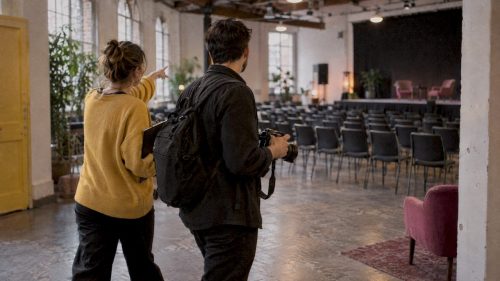
A good event shot list is a ranked list of the moments your photos must capture, tied to the programme and to what you will use the images for. Start from the purpose, then list the shots, then hand the photographer the running order. Below is a complete list you can adapt for a conference, launch, networking evening or party, plus the brief that turns it into pictures your marketing team can post the next morning.
At LemonLens, every booking starts by clarifying what the photos are for. That one question decides which shots are essential and which are nice to have, and it is the logic behind the list below.
TL;DR
- Rank every shot as essential, high or medium, so the photographer knows what to protect when the schedule slips.
- Build the list around the run-of-show: each agenda item gets a time window and no more than five required shots.
- Cover seven blocks: venue, details and branding, speakers, audience, networking, sponsors and VIPs, and groups.
- Send the list, floor plan and schedule one to two weeks ahead, and agree delivery speed and image-use terms before booking.
- For events, LemonLens delivers within 48 hours, so images are still relevant when you post them.
Table of Contents
- What an event shot list is for
- Start with the purpose, not the shots
- The shot list, block by block
- Rank the shots so the photographer can prioritise
- Build the list around the run-of-show
- Conference photography: the extra detail
- Weddings and celebrations: a different list
- What your event photography brief should include
- How many photos should you expect?
- What this looks like with LemonLens
- Our point of view
- Book event photography in London
- FAQ
- Sources
What an event shot list is for
A shot list is the set of images you need to come away with, written down before the day. It is not a script for every click. A photographer will still find moments you never predicted. The list exists to guarantee the ones you cannot afford to miss: the keynote, the sponsor banner, the award handover, the CEO with the guest of honour.
It also protects you from the usual failure of event galleries: hundreds of pleasant crowd shots and no clean picture of the speaker your marketing team promised to feature. Photographers working from the same event brief tend to deliver what the organiser can actually use, because they know the use in advance.
Event work differs from weddings in one important way. As Map D’s guide to briefing event photographers puts it, the photographer covers a scheduled programme, sponsors and speakers expect to see themselves afterwards, and the marketing team wants usable images quickly. Your list should reflect all three.
Start with the purpose, not the shots
Before you write a single line, answer three questions:
- Where will the images go? Social posts during the event, the website, a sponsor report, press, an internal newsletter, next year’s promotion. Each use needs different pictures.
- Who must appear? Named speakers, sponsors, board members, award winners, the founder.
- When do you need them? Same-day selects for social media are a different job from a full edited gallery.
Map D suggests matching the questions to how the photos will be used: same-day selects for social media, a full edited gallery for next year’s marketing, sponsor-tagged folders for sponsor reports, high-resolution speaker selects for press. Write the answers at the top of your list. Everything below follows from them.
The shot list, block by block
This structure suits most corporate events, conferences and launches. It draws on the way published templates group shots, such as the before-the-event, key moments, group portraits and candids split in EventFlow’s shot list template, and on the corporate skeleton in Photography Icon’s shot list guide.
1. Venue and establishing shots
These prove the event happened and set the scene. Shoot them before doors open, when the room is clean.
- Exterior with signage or banner, and the entrance
- Registration desk and queue once people arrive
- The empty room, set up and lit
- Stage and screens with the event branding visible
- One wide of the full room at its busiest moment
The full-room wide is the one organisers most often forget to schedule. Tell the photographer when the room will be fullest, usually just after the opening session starts or at a lunch break.
2. Details and branding
Small things carry a lot of weight in marketing and sponsor reports.
- Name badges, programmes and welcome bags
- Table settings, food and the bar
- Step-and-repeat or backdrop banners
- Screens showing the logo or key slides
- Any signature touch: a custom cocktail, a product display
If a sponsor paid for a stand, a screen slot or a branded coffee station, list it here by name. Sponsors look for their logo in the gallery before anything else.
3. Speakers and stage moments
For each named speaker, ask for a wide frame showing the stage and room, a medium frame, and a close frame with a clear expression. Photography Icon’s corporate skeleton uses that wide, medium and close pattern for each speaker. Add:
- Panels, with the moderator and every panellist at least once
- Award handovers, in both a handshake version and a posed version facing the camera
- Q&A, with the person asking the question
- Slides or screen content, if legibility matters to you
Write the speaker’s name and the time slot next to each line. A photographer cannot recognise your head of operations by guesswork.
4. Audience and reactions
Speaker shots look flat without the room’s response.
- Full-audience wides from the back and from the side
- Laughter, applause and note-taking close-ups
- Over-the-shoulder views toward the stage
- Breakout sessions and workshops, if you run them
These are the images that make a conference look busy and engaged, which is often exactly what next year’s promotion needs.
5. Networking and candids
- Small clusters in conversation
- Handshakes and introductions
- Coffee stations and hallway moments
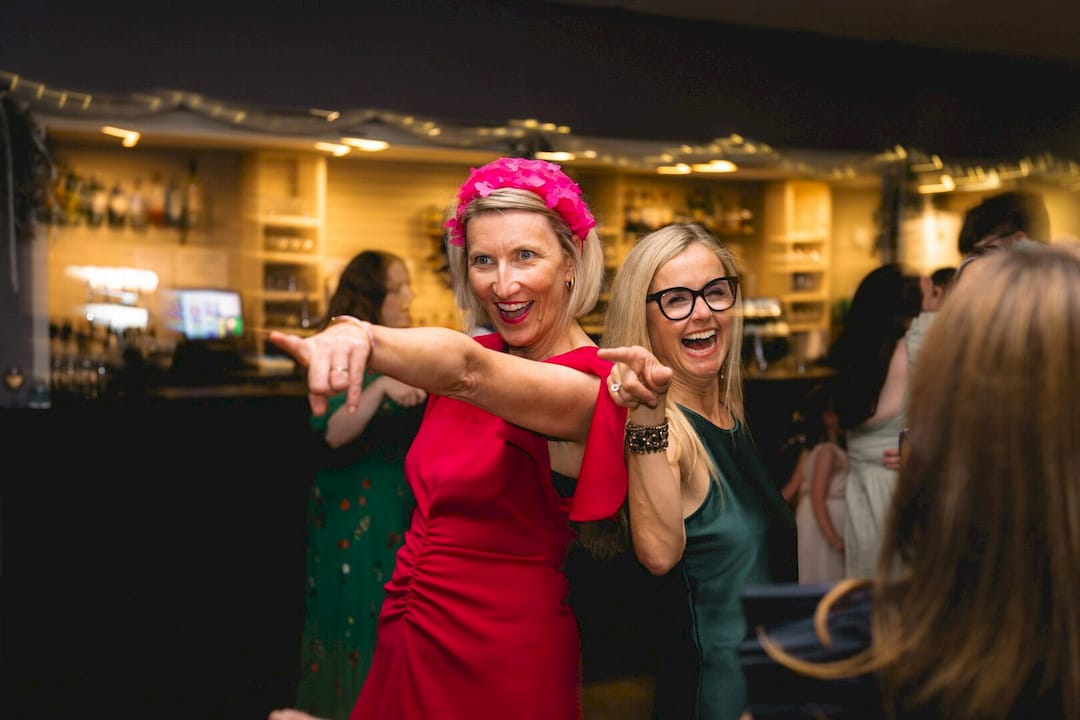
- Drinks receptions, with the room’s energy visible
Small groups of three to five read best in photos: they look sociable without turning into a crowd. If you run a networking evening, our networking event photography example from South Kensington shows how candid coverage looks in a relaxed room.
6. Sponsors, VIPs and key stakeholders
- Sponsor logos by tier, in context rather than as isolated close-ups
- Booth or stand representatives with their display
- Named board members, donors or guests of honour, each in at least one usable frame
Give the photographer a headshot or a description of each named person, and one on-site contact who can find them and pull a VIP aside for thirty seconds.
7. Groups and portraits
- Team photo before doors open, when everyone is fresh
- Leadership group
- Speaker group
- Organising team
- Optional headshot station for attendees
Formal groups are the biggest schedule risk, so they get their own section below.
Rank the shots so the photographer can prioritise
A long list with no ranking is a problem when the keynote overruns and the photographer has to choose. Mark each line:
- Essential: the picture you would be unhappy to lose, such as the keynote speaker, the sponsor wall and the award handover.
- High: strongly wanted, such as audience reactions and the leadership group.
- Medium: good to have, such as table details and the bar.
Keep essentials to a short list. If everything is essential, nothing is. A one-page list with ten to fifteen essentials is easier to work from than a three-page spreadsheet, and the photographer will spend the day looking at the room, not at a document.
Build the list around the run-of-show
The most useful shot lists follow the agenda. TIME&SPACE’s event photography timeline sets out a five-step method that works well:
- List every programme item in order from the run-of-show.
- Give each item a time window and a required shot list of five items or fewer.
- Add the photographer’s starting position for each block: front of stage, mid-room or rear of room.
- Confirm access, lighting and load-in with the venue, allowing at least 30 minutes before the first shot.
- Share the finished schedule with the brief attached 48 hours before the event.
A worked example for a half-day conference:
| Time | Agenda item | Required shots | Priority |
|---|---|---|---|
| 08:30 | Doors, registration | Exterior sign, registration desk, badges | High |
| 09:00 | Welcome and keynote | Speaker wide, medium, close; full room | Essential |
| 10:15 | Panel | Each panellist once; moderator; audience reaction | Essential |
| 11:00 | Coffee and networking | Clusters, sponsor stand, details | High |
| 11:45 | Awards | Handshake, posed version, winner with team | Essential |
| 12:15 | Group photos | Team, leadership, speakers | High |
Each row has five shots or fewer, a priority and a time. That is all a photographer needs to plan positions and batteries.
Watch the clock on arrivals and groups
Two habits save the most time. First, cap arrival coverage. TIME&SPACE recommends 30 minutes for events under 300 guests and 45 minutes for larger ones, because the first hour is easy to overload. Add a five-minute buffer between major items so a late start does not swallow the next shot.
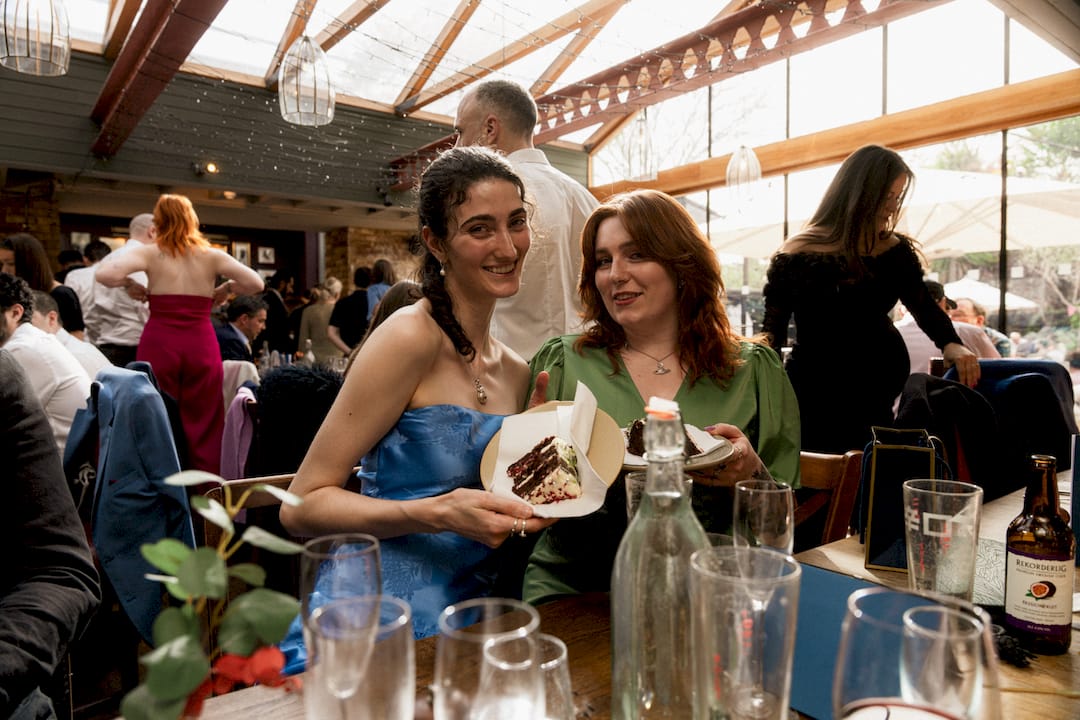
Second, control the formal groups. EventFlow advises limiting them to 10 to 12 combinations and starting with the largest groups so people are released earlier, which can turn a 40-minute exercise into about 15. TIME&SPACE suggests allowing fifteen minutes for a scheduled group photo of under 100 people, with one person assigned to gather attendees. Name that person in the brief.
Conference photography: the extra detail
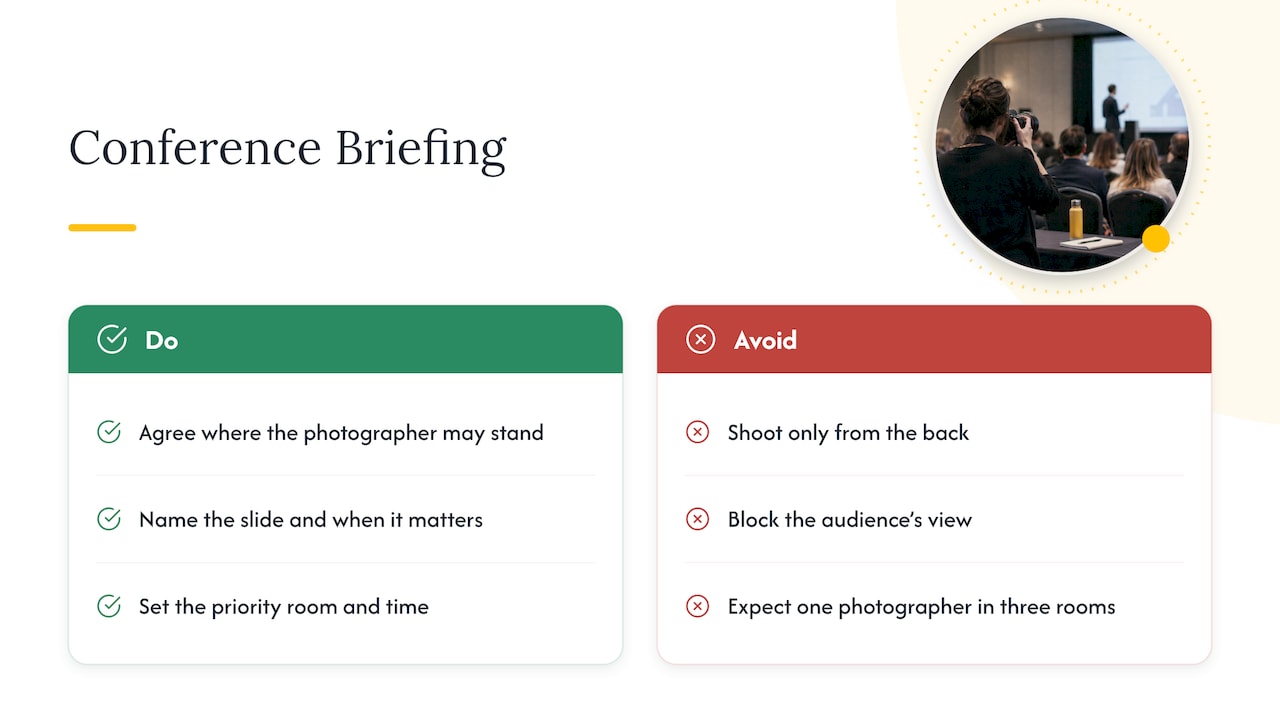
Conferences add a few demands that a general event list misses.
Positions. Speakers are best photographed from the front and side of the room, not only from the back. Agree where the photographer may stand and move during talks, so nobody blocks the audience’s view.
Light and screens. Stage lighting changes between sessions, and slides can glow or wash out in a photo. If a slide matters, say which one and when.
Breakouts. If sessions run in parallel, tell the photographer which room carries the priority at which time. One photographer cannot be in three rooms. Larger programmes may need coverage across a day or two; our corporate offers include a half-day, a full day and a two-day conference option, covered further below.
Moving unobtrusively. Speakers and delegates should not notice the photographer. That comes down to how the day is directed and how quietly the photographer works, so ask about approach, not just kit.
Weddings and celebrations: a different list
The fixed moments of a wedding are not negotiable in the way a conference agenda is. The ceremony sequence is the core: the walk down the aisle, a wide frame of the room, the vows from the allowed position, the rings going on and the kiss, as KitBorough’s wedding guide sets out. Family groupings are written as lines of first names, kept to about eight to twelve, and ordered so people join or leave a few at a time, starting with the largest group, as Photography Icon advises.
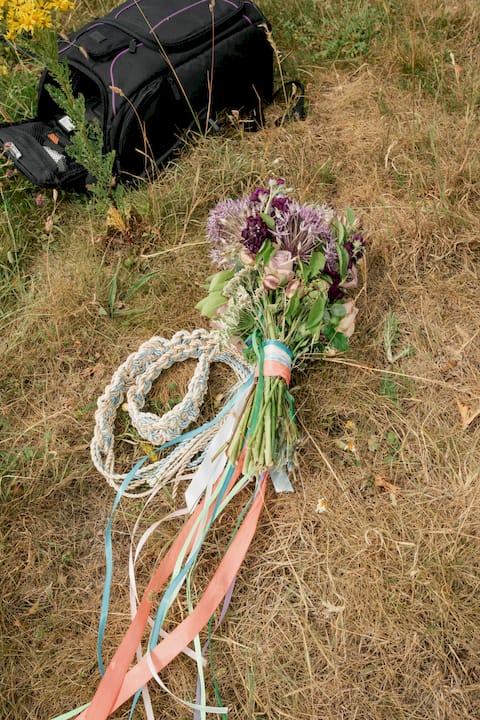
For couples, we have a dedicated one-page wedding shot list for UK couples and an eight-hour wedding photography timeline you can copy. For birthdays and private parties, take the venue, details, candids and groups blocks above and drop the speakers and sponsors.
What your event photography brief should include
The shot list is one page of the brief. The rest tells the photographer how the day works and what happens to the pictures afterwards. Include:
- Purpose and audience: what the images are for and who will see them.
- Running order: the agenda with times, locations and the priority list.
- Floor plan and venue details: access times, load-in, any restrictions on flash or movement.
- Key people: names, roles and a photo or description of each.
- Guests who prefer not to be photographed: a note for the photographer, which EventFlow’s template includes.
- One on-site contact: someone with a phone who can open doors and find people.
- Delivery: format, how fast, how many images, and how the gallery is shared.
- Usage: what you may do with the images.
Send it with the floor plan and schedule one to two weeks before the event, as Map D recommends, and send the finalised version again 48 hours out.
Usage rights to settle before you book
Images are only useful if you can use them as planned. Map D’s list of questions covers who owns the copyright, what licence is granted (marketing, social media, website, print, advertising), whether it is time-limited, whether sponsors, exhibitors and speakers may use the photos, whether you can edit, crop or add text, and whether a photo credit is required. Get the answers in writing before the shoot, not after the gallery arrives.
Delivery questions that matter to organisers
Ask how many edited images to expect, how quickly the full gallery arrives, how many same-day selects you will get, how the files are shared and for how long, and whether you receive both high-resolution and web-sized files. If sponsors need their own reports, ask whether images can be tagged by sponsor, speaker or session. For teams planning how photo delivery fits around an event, this guide to planning photo delivery for event teams is a useful starting point for weighing agency options.
How many photos should you expect?
There is no single correct number, and a promise of a fixed count is less useful than a clear brief. A short corporate evening needs fewer finished images than a two-day conference with several rooms. What matters is that every essential on your list appears in the gallery in a usable form, and that the set covers each use you named. Ask the photographer for an estimate based on your running order, and agree it in the booking.
What this looks like with LemonLens
We built our event work around the same logic as the list above. Every booking starts by clarifying the purpose of the photos, and the day is directed so people are comfortable in front of the camera. Event images are delivered within 48 hours, so your team can post while the conversation is still going.
Pricing is published and transparent. London event photography runs from £400 to £900. For corporate work, a half-day starts from £350, a day rate from £650 per day and a two-day conference from £1,100. You can see how we cover corporate rooms on our corporate event photography page, or read a real example from a corporate match watch party in Canary Wharf and a night at The Distillery in East London. If you also want motion, we offer event videography, and our guide to event highlight videos and UK rights covers what to agree up front.
Our point of view
Most event galleries disappoint for one reason: nobody decided what the pictures were for. The photographer shoots the room as it appears, the organiser opens the gallery and finds forty pleasant crowd shots and no clean image of the keynote or the sponsor wall.
That is why we begin every booking with the purpose. A launch that needs social posts by the evening needs a different list from a conference building next year’s brochure. When the purpose is clear, the shot list shrinks to what matters, the photographer is directed rather than guessing, and the day feels calmer for everyone in front of the lens.
Speed matters just as much. Event images lose value quickly, which is why we deliver event photos within 48 hours. A short, ranked list, a running order and an agreed delivery time are the three things we would ask any organiser to prepare, and they are the ones that make the biggest difference to the result.
Emmet
Book event photography in London
If you have an event coming up in London, send us your running order and your list of essentials, and we will tell you how we would cover it. See our London event photography page for what is included and published prices.
FAQ
What should be on an event photography shot list?
Cover venue and establishing shots, details and branding, speakers, audience reactions, networking, sponsors and VIPs, and groups. Attach names and times to the people and moments that matter, and rank each shot as essential, high or medium.
How long should a shot list be?
Short enough to be used on the day. Keep each agenda item to five shots or fewer and keep the essentials to a short list, so the photographer can protect them if the schedule runs late. A single page with the running order beside it works better than a long document.
When should I send the brief to the photographer?
Send the shot list with the floor plan and schedule one to two weeks before the event, then confirm the final version about 48 hours ahead. That gives the photographer time to plan positions, check access with the venue and ask questions about key people.
How do I handle group photos without losing coverage?
Schedule them for a fixed time and assign one person to gather people. Keep the combinations to 10 to 12 and start with the largest group so people can leave sooner. Done this way, a group session can take around 15 minutes instead of 40.
What image-use terms should I agree before booking?
Agree who owns the copyright and which uses the licence covers, such as social media, website, print and advertising. Check whether it is time-limited, whether sponsors and speakers can use the images, and whether you may edit or crop them.
Sources
- Questions to Ask an Event Photographer + Shot List, Map D
- Event Photography: Shot List Template, EventFlow
- How to Write a Photography Shot List (With Examples), Photography Icon
- Event Day Photography Schedule: The Complete Timeline, TIME&SPACE
- How to Photograph a Wedding (Shot List), KitBorough