
Small dried petals and biodegradable paper discs produce the most photogenic confetti moments, and most UK venues will insist on biodegradable confetti anyway. Both float slowly, catch the light and give photographers more time to work. Order more than you think you need, test your colours against your ceremony backdrop, and tell your photographer and your venue what you’re planning well in advance.
TL;DR:
- For 100 guests, order about 5 liters for a half throw or 10 liters so everyone can throw together and create a denser frame.
- Ask your venue about restrictions before buying, and confirm plans at least four weeks ahead where required; many venues ban cannons and nonbiodegradable confetti.
- A shutter speed of 1/500 to 1/1000 of a second freezes petals, while an aperture near f/4 to f/5.6 keeps the couple sharp.
- Position yourselves with light behind guests and a simple backdrop, then use a countdown and distribute prefilled cones or pouches to coordinate the throw.
- When confetti is prohibited, bubbles and ribbon wands offer mess free alternatives; assign someone to collect any petals promptly to keep paths safe.
Table of Contents
- Which confetti types photograph best?
- How much confetti should you order?
- Timing, placement and organising the throw
- Photographer tips for sharp, joyful confetti shots
- Venue rules and safer confetti alternatives
- Camera equipment for confetti photography
- Why we recommend dried petals and paper discs
- How we help you get the confetti shot right
- FAQ
- Sources
Which confetti types photograph best?
The material you choose decides how your confetti behaves in the air, and that behaviour is what separates a flat snapshot from a shot people remember.
Dried flower petals are the classic choice for a reason. They’re light enough to float rather than drop, they’re fully biodegradable, and they come in colours that can be matched to your flowers or your venue. For contrast, pick pale petals against dark stone or brick, and richer tones such as deep red or purple against lighter backdrops like fields or beaches, a tip echoed by petal specialists who work with couples on exactly this problem, including Shropshire Petals.
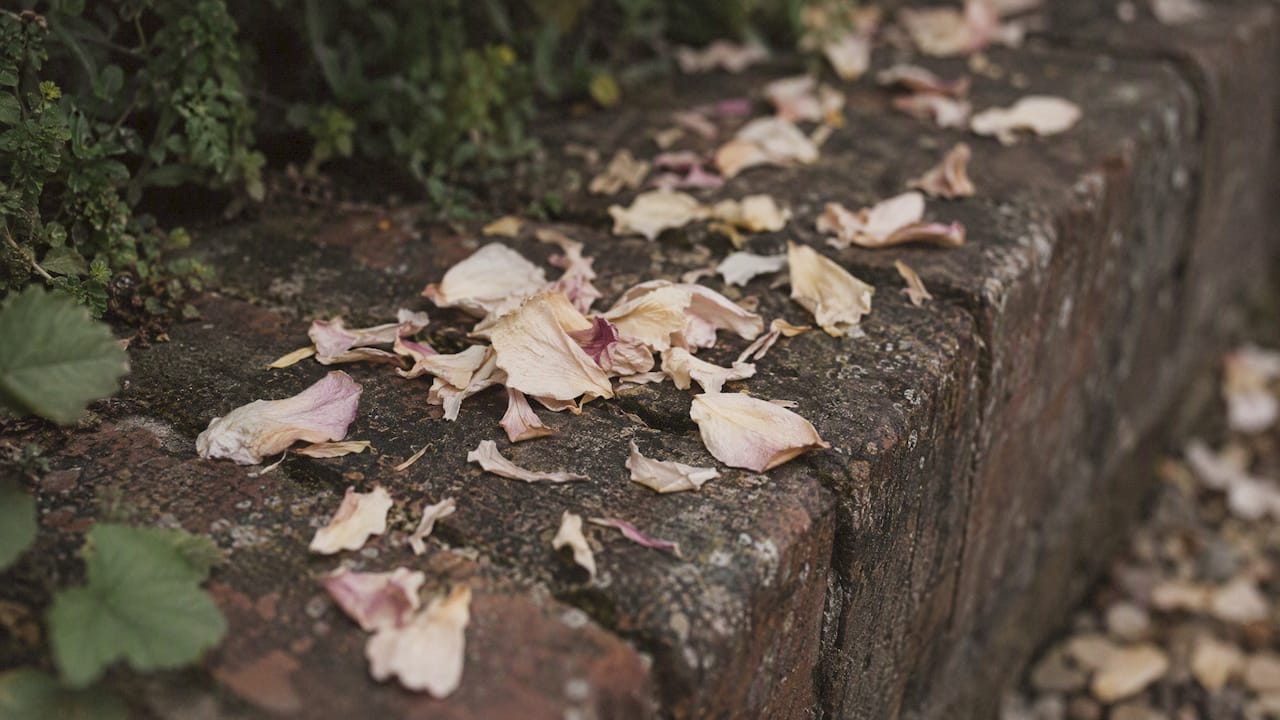
Biodegradable paper discs behave differently again: they’re often lighter still, so they hang in the air longer and build a genuine cloud effect rather than a quick scatter. For a big group shot where you want confetti drifting through the whole frame, discs usually win.
Tissue confetti and fresh (rather than dried) petals sit at the other end of the scale. Fresh petals are heavier and tend to fall fast, which suits a tight, intimate shot rather than a wide group throw. Tissue confetti can look pretty but rarely biodegrades as reliably, which rules it out at many venues.
- Dried petals: slow float, strong eco credentials, best for colour-matched shots.
- Paper discs: longest float time, builds a visible cloud, ideal for wide shots.
- Fresh petals: fast fall, better for close, intimate frames.
- Tissue confetti: visually fine but often non-biodegradable, so check before buying.
Metallic and plastic confetti are best avoided altogether. They don’t break down, they’re banned at the vast majority of UK ceremony venues, and they leave a mess that falls squarely on you or your venue to clear up.
How much confetti should you order?
Running short on confetti is one of the easiest ways to end up with a thin, sparse photo instead of the dense, joyful cloud you pictured.
- Work from the standard conversion: roughly 50 handfuls equals 5 litres, and 100 handfuls equals 10 litres, a ratio used by suppliers when sizing orders for confetti photos.
- Size the order to your guest list: for 100 guests, 5 litres give a reasonable half-throw effect, but 10 litres is the figure suppliers recommend if you want everyone throwing at once.
- Double your base estimate where you can: specialists in petal confetti advise aiming for at least 10 litres for 100 guests specifically to get a dense cloud rather than scattered specks, a view set out by the Dried Petal Company.
- Plan distribution ahead of the day: pre-filled cones or pouches handed out by ushers work better than a single open box, since guests grab roughly even amounts rather than one person emptying it early.
Buying slightly more than the guidance suggests costs little extra and removes the risk of a flat, sparse shot you can’t redo.
Timing, placement and organising the throw
The moment you choose and where you stand both matter as much as the confetti itself.
- Arranged circle: guests form a ring around you, confetti falls from multiple directions, and it suits a tighter courtyard or garden space.
- Tunnel walk: guests line both sides and throw as you pass between them, which photographs well for a long, dramatic corridor shot.
- Exit throw: confetti thrown as you leave the ceremony room or register office, simplest to organise and the most common choice at smaller venues.
Position yourselves with the light behind your guests and in front of you where possible, since backlit confetti glows rather than disappearing into a dull background. A plain wall, hedge or doorway behind you gives the confetti somewhere to stand out against, rather than competing with a busy scene.
For the run sheet itself, keep it simple: a short countdown so everyone throws together, one named helper moving along the line handing out confetti just before the moment, and someone stewarding the group so nobody throws too early or steps into the shot.
Photographer tips for sharp, joyful confetti shots
Capturing confetti well is mostly about shutter speed, timing and light, and these are the calls we make on every wedding videographer and photographer in Kansas City, MO we shoot.
A shutter speed around 1/500 to 1/1000 of a second freezes individual petals mid-air without making the scene feel stiff; much slower and the confetti blurs into streaks, which can work creatively but isn’t the safe choice for a couple’s main shot. Keep your aperture wide enough to blur the background slightly, but not so wide that your focus misses the couple as confetti crosses the frame, somewhere around f/4 to f/5.6 usually keeps both the couple sharp and the confetti visible.
- Shoot in burst mode through the whole throw, since the best frame is rarely the first one.
- Call the countdown yourself so you’re ready a beat before the confetti leaves guests’ hands.
- Position the couple with light coming from behind the guests so each petal catches a rim of light as it falls.
- Brief your photographer on which confetti type you’re using, since paper discs and dried petals need slightly different timing to look their best.
Pro Tip: Ask your photographer to take one test shot of an empty throw area beforehand, checking exposure and background contrast before the real moment happens.
On shoots such as our Twickenham hotel wedding, directing exactly where guests stand and when they throw made the difference between a scattered group shot and a clean, readable one. The same applies at smaller ceremonies, including the Morden registry office weddings we’ve covered, where space is tighter and timing matters even more.
Venue rules and safer confetti alternatives
Most UK register offices and historic venues require biodegradable confetti and ban confetti cannons outright, a policy set out clearly by Kensington and Chelsea’s wedding guidance, which also asks couples to confirm their confetti plans with the venue at least four weeks ahead. Brighton & Hove council follows the same pattern: hand-thrown biodegradable confetti is fine outside approved venues, but confetti cannons are not permitted, according to its ceremony guidance.
- Check your specific venue’s rules before buying, since some restrict confetti to certain doors or ban it indoors entirely.
- Bubbles and ribbon wands are safe, mess-free alternatives where confetti isn’t allowed at all.
- Appoint one person to sweep or collect confetti into a bag immediately afterwards, which reassures venues and avoids any slip hazard on paths or steps.
Camera equipment for confetti photography
A fast zoom or prime lens around f/2.8 gives you the flexibility to stay back far enough to capture the whole throw while still blurring a busy background. A 70-200mm lens is a common choice for this exact shot, since it lets you stand further from the crowd without losing detail on the couple’s faces.
A camera body with a fast continuous burst rate matters more here than almost anywhere else in a wedding day, since confetti peaks and falls within two or three seconds. Mirrorless bodies with electronic shutters tend to shoot faster bursts with less lag than older DSLRs, which means more usable frames from the same throw.
A second body or a quick lens swap helps too: wider for the full group, longer for a tight shot on the couple’s faces as petals cross in front of them. If you only have one camera, decide in advance which framing matters more and set up for that, rather than trying to adjust mid-throw.
Flash is rarely necessary outdoors in daylight, but a touch of fill flash on an overcast day can stop petals disappearing into a flat grey sky. Indoors or at dusk, a flash or speedlite becomes close to essential, since confetti falls fast and needs enough light to freeze clearly.

Why we recommend dried petals and paper discs
After enough weddings, a pattern holds: dried petals and biodegradable discs photograph best, venues accept them without argument, and couples never regret ordering slightly too much. We balance that creative preference against each venue’s actual rules rather than fighting them, and quick turnaround means you see whether the shot worked within days, not months. Shoots like our Twickenham and Morden ceremonies back this approach up in practice, not just theory.
— Emmet
How we help you get the confetti shot right
We treat the confetti moment as one of the most directed parts of a wedding day, not a lucky accident. Booking with a professional photographer means agreeing the confetti type, timing and positioning in advance, so the shot is planned rather than hoped for, backed by fast delivery and clear pricing from the start.
- Weddings start from £1,850, covering full-day coverage and direction of moments like the confetti throw.
- You should know the price and what is included before the day, with no surprises afterwards.
- Turnaround can be quick, so you can expect your confetti shots within days rather than weeks.
Take a look at our wedding photography services and get in touch to check availability for your date.
FAQ
What confetti looks best in wedding photos?
Small dried petals and biodegradable paper discs tend to photograph best, since both float rather than drop and catch the light as they fall. Paper discs usually stay airborne longest, which helps build a visible cloud across a wide shot.
How much confetti do you need for 100 guests?
A common guide is 5 litres (around 50 handfuls) for a half-throw, or 10 litres (around 100 handfuls) if you want everyone throwing at once. Many suppliers suggest leaning towards the higher figure to avoid a sparse, thin-looking result in photographs.
What does confetti symbolise at a wedding?
Confetti thrown over a couple traditionally represents good wishes, fertility and celebration, echoing older customs of showering newlyweds with grain or rice. The modern version, usually petals or paper, keeps the gesture while being easier and safer to clean up.
Who usually throws the confetti at a wedding?
Guests gathered near the ceremony exit or along a tunnel formation typically do the throwing, often prompted by an usher or a named helper handing out confetti just beforehand. Many venues ask that only guests, rather than professional helpers, throw confetti, so check your venue’s specific policy.
Is biodegradable confetti required at UK wedding venues?
Many UK register offices and historic venues require biodegradable confetti and prohibit confetti cannons and plastic confetti entirely, as set out by guidance such as Kensington and Chelsea’s confetti rules. Always confirm your own venue’s specific policy before ordering, since rules vary between locations.
Sources
- Confetti rules | Marry me in Kensington and Chelsea
- How to get the perfect confetti photo – Shropshire Petals
- What happens at your wedding or civil partnership ceremony | Brighton & Hove
- Your complete guide to confetti rules at UK churches and venues | Dried Petal Company