Gender-affirming photography is portrait, wedding, event or brand work done by someone who treats your identity as a fact, not a topic. It means you direct how you are seen, nobody guesses at your pronouns, and your images go only where you agreed they would. London has several routes to that: LGBTQ+ photographer directories, collectives, independent queer and trans photographers, and general studios that work in an inclusive way. This guide compares them, tells you what to ask before you book, and explains where we fit.
TL;DR
- Being queer-led matters less than how a photographer works: consent, direction, privacy and retouching should all be agreed before the shoot.
- Under the Equality Act 2010, a photographer cannot lawfully refuse you a service because of gender reassignment.
- Ask in writing where your images will be stored, shared and published. Never assume a public event means consent to wider use.
- London has four realistic routes: a queer photographer directory, a community collective, a solo specialist, or an inclusive studio. Each suits a different job.
- Our LemonLens portrait sessions start at £200, weddings from £1,850 and event coverage at £400 to £900, all with published prices.
Table of Contents
- What “gender-affirming” should mean in a photo session
- Your rights when booking in the UK
- Protecting your images: privacy and outing risk
- The main options in London compared
- How we approach it at LemonLens
- Portraits and headshots: what you will pay
- Weddings and ceremonies
- Events: Pride, club nights and community gatherings
- Businesses and brands that want inclusive imagery
- A short checklist before you book anyone
- Ready to book with us
- FAQ
- Sources
What “gender-affirming” should mean in a photo session
The phrase gets used loosely. In practice, the guidance written by and for trans communities is consistent. The 519’s media guide on photography and video says the aim is to reflect the person’s own sense of identity and dignity, and it steers away from stock “transition journey” imagery unless the subject asks for it. You are photographed as who you are now, not as a before-and-after story.
That translates into a few concrete behaviours:
- You choose the pose language. A good photographer asks about angles, lighting and expression before shooting, and does not push gendered poses (hands on hips, soft chin tilt, arms folded) onto you.
- Names and pronouns are settled first. That includes the name on the booking, the invoice and the gallery link, which may be seen by other people.
- Retouching is a conversation. You say what you want softened, kept or left alone. Nothing is “corrected” unasked.
- The shoot is not about your body unless you say so. Clothing, binders, prosthetics, packers, makeup and shapewear are treated as ordinary parts of getting ready.
- Use is agreed in advance. Portfolio, social media, website or nothing at all.
The point of all this is autonomy. The same 519 guidance describes inclusive photography as an environment of safety and agency rather than a visual quota.
Your rights when booking in the UK
Gender reassignment is a protected characteristic under the Equality Act 2010. Section 7 of the Act covers anyone proposing to undergo, undergoing or having undergone a process to reassign their sex, and it does not depend on medical treatment. A trade columnist writing in Professional Photo spelled it out for the industry: refusing wedding or portrait work because of gender reassignment is unlawful discrimination.
That gives you a floor, not a guarantee of a good experience. A photographer who is legally obliged to take your booking is not necessarily one who will make you comfortable. The aim of this guide is to help you find the second kind. If you do meet discrimination, Citizens Advice and the Equality Advisory and Support Service are the usual first calls, and a solicitor can advise on a claim.
Protecting your images: privacy and outing risk
For many trans and non-binary people the biggest worry is not the shoot but what happens afterwards. Trans Journalists Association guidance explains that publishing an image without informed consent, or in a context that does not match someone’s life, can out them and expose them to harm. It adds that being visible at a public LGBTQ+ event does not waive your privacy elsewhere.
The law points the same way. The ICO notes that if someone can be recognised in a photograph, it is usually their personal data. A photographer who wants to use it commercially needs a lawful basis, and consent is the most transparent one. That page is written for schools, but the principle applies to any business using recognisable people’s images.
Before you book, ask:
- Where will my images be stored, and for how long?
- Who else can see the gallery, and is it password protected?
- Will anything be posted publicly, and can I approve or veto each image?
- Can I withdraw permission later, and how fast will you remove an image?
- What name and pronouns appear on all paperwork and delivery emails?
A professional answers these without hesitation. Vagueness is a signal. If you are photographed as a guest at an event, you can also ask the photographer to skip you or delete frames, and a good one will.
The main options in London compared
There is no single “trans photography studio” that suits everyone. Here is how the routes compare, based on what each type of provider publicly says about itself.
| Route | Best for | Strengths | Watch-outs |
|---|---|---|---|
| Queer photographer directory (for example queer.photo) | Matching with someone whose portfolio you like | A choice of queer-led photographers, matched to your brief | Each photographer sets their own rates and working style, so you vet them individually |
| Community collective (for example Gay Photographers Network) | Meeting photographers, community events and exhibitions | Strong local network | Largely a group for photographers rather than a booking service, and it is described as a gay photographers group, so check it covers trans work |
| Independent queer or trans photographer | Personal, artistic or documentary portraits | Lived experience, a very personal approach | Availability is limited, turnaround varies, and wedding or corporate capacity may be small |
| Inclusive studio, such as LemonLens | Weddings, brand and business portraits, events, headshots, with fixed prices and fast delivery | Published prices, a directed process, quick turnaround, full-service photo and video | Not a trans-only studio, so confirm your needs at enquiry |
Queer.photo and Gay Photographers Network are not ours and we do not control what they offer, so look at their sites directly. The right answer depends on the job. For a creative personal project with an artist who shares your experience, an independent specialist may be perfect. For a wedding, a launch event or a set of team portraits where deadlines and logistics matter, you may want a studio with a repeatable process.
Questions that separate good from merely friendly
Rainbow flags on a website are not a method. Look for:
- Portfolio evidence. Do you see trans and non-binary people photographed across several shoots, not one stock set?
- A pre-shoot call. A short conversation about pronouns, comfort, outfits and use of images.
- Written terms. Usage rights, storage and deletion in the contract, not just in conversation.
- Direction. Someone who actively guides you, so you are not left to “just be natural”.
- Price clarity. Hourly rates, editing and travel stated up front.
How we approach it at LemonLens
We are a London photography and videography service covering portraits, weddings, events and brand content. Every booking starts by clarifying what the images are for. We then direct the session so you are comfortable and the pictures do their job, whether that is winning clients, announcing a launch or remembering a day.
That approach suits gender-affirming work well, because the questions are the same ones a careful photographer asks anyway: what do you want to say, who will see it, and how do you want to look? We do not push a house look onto anyone. We work to your brief.
We already shoot queer events and weddings. You can see how we cover LGBTQ+ nights in London, a community night in Peckham in our queer event case study, and our same-sex wedding shot list with prompts you can copy.
We do not claim to be a trans-only studio, and we would rather say so plainly. What we offer is a clear process: we agree the purpose, the pronouns, the use of the images and the delivery date before we pick up a camera. If you tell us how you want to be seen, that is the brief. If you tell us a frame stays private, it stays private.
— Emmet
Portraits and headshots: what you will pay
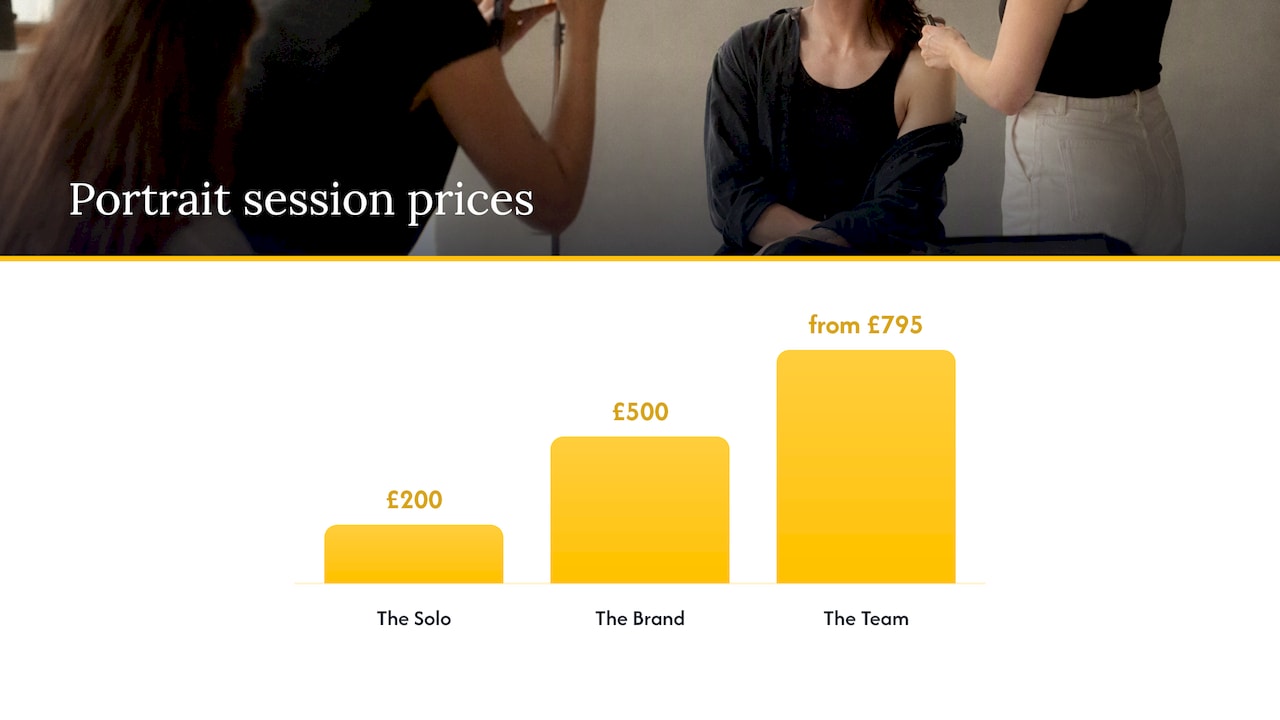
Portraits are the most common gender-affirming booking: a new name on a professional profile, a first shoot after a milestone, or personal-brand images for a business. Our published portrait prices are:
| Session | Price |
|---|---|
| The Solo | £200 |
| The Brand | £500 |
| The Team | from £795 |
The Solo suits an individual who needs a strong portrait or headshot. The Brand is for founders, creatives and freelancers who need a set of images for a website and social channels. The Team covers groups. All three are on our portrait sessions page. If your main use is a professional profile, our LinkedIn headshot service is the place to start, and our personal branding sessions are built for founders and creatives.
If being photographed in a studio feels exposing, an environmental portrait on location lets you choose a space that feels like yours: home, a favourite café, a park, a workplace.
Updating your professional image
A common reason people contact photographers is that their old headshot carries a previous name, look or presentation. Updating it is a practical safeguard as much as a visual refresh. Mention this when you enquire so the images, filenames and delivery emails all use the right name from the start. Tell us if you want old galleries or files removed from anywhere they could be seen.
Weddings and ceremonies
Couples sometimes worry about a photographer’s reaction to two grooms, two brides, a trans partner or a ceremony that does not follow a template. Our wedding packages start from £1,850, and our wedding photography page describes a relaxed, unposed style. For same-sex couples, the shot list and prompts we published will help you brief any photographer.
Things to settle with any wedding photographer:
- Names and roles. How you want each of you introduced in the day’s timeline, and what guests call you.
- Family dynamics. Who should or should not be photographed together, and who sees the gallery.
- Posing. Skip “bride and groom” cues if they do not apply; ask for prompts that fit you both.
- Sharing. Whether the photographer may post anything online, and when.
If you are comparing styles first, our guide to wedding photography styles lists what to ask.
Events: Pride, club nights and community gatherings
Event photography is where consent gets complicated, because the room is full of people who did not hire the photographer. Guidance for journalists is clear that a person attending a public queer event has not agreed to be published everywhere. Organisers should therefore agree rules with the photographer:
- Signs at the entrance say photographers are present.
- A visible “no photos” option, such as a wristband or a lanyard sticker.
- A policy for removing images on request.
- A rule about not posting identifiable faces from closed or sensitive events without permission.
Our London event photography runs from £400 to £900, with event coverage details here. We aim to deliver event images within 48 hours, which also helps: faster delivery means faster deletion of anything someone asks us to remove. If you are running a larger programme, our corporate event rates start from £350 for a half-day, £650 per day and £1,100 for a two-day conference. For highlights, we also offer event videography.
Businesses and brands that want inclusive imagery
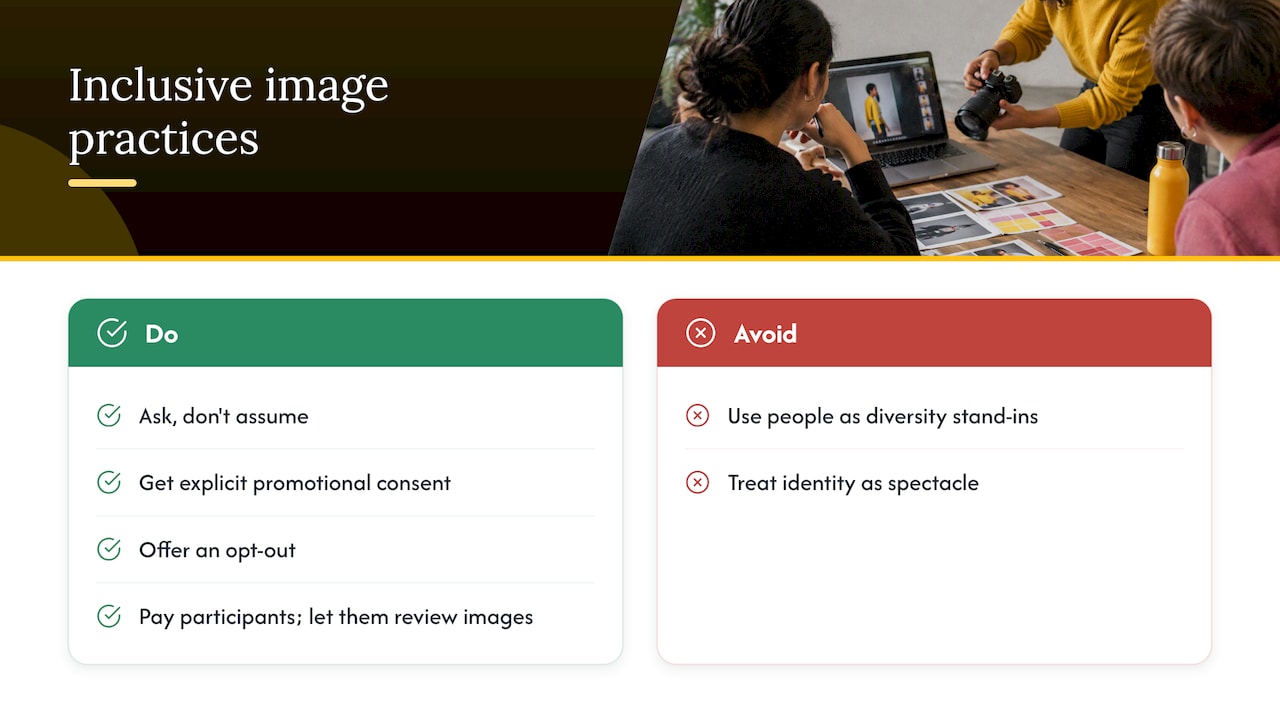
If you run a brand or an organisation and want your imagery to show trans and non-binary people, the principle is the same as for individuals: ask, do not assume. Consent for promotional use should be explicit, and it is best practice to offer an opt-out even where you could rely on another lawful basis. Pay people properly, let them see their images, and do not use them as stand-ins for a diversity message. Avoid tropes. The 519 guide cautions against clichéd visuals of the sort that treat identity as spectacle.
If your business needs this kind of content, our business photography and videography services can be scoped around your brief, and our brand story video checklist will help you avoid reshoots. Prices for these are agreed per project.
A short checklist before you book anyone
- Look at at least ten portfolio images that include people like you.
- Ask for a call, not just emails.
- Confirm your name and pronouns in writing.
- Put image use, storage and deletion in the contract.
- Ask what retouching is standard, and what is optional.
- Agree delivery times. Waiting weeks for images that matter to you is stressful, so ask for a date.
- Bring a friend if it helps, and say what you do not want photographed.
The Institute of Medical Illustrators’ guidance for clinical photographers working with trans and gender-diverse patients has a useful model: explain what will happen, ask what the person prefers and agree it first. That is a clinical setting, which a portrait shoot is not, but the habit of explaining before you act transfers well.
Ready to book with us
If you want a photographer who agrees your purpose, your pronouns and your privacy terms first, tell us about the shoot. You can start from our portrait sessions or the LemonLens home page and tell us what you need. Portraits start at £200, and we will confirm anything else in a transparent quote.
FAQ
Is there such a thing as a trans photography studio in London?
There are queer-led photographers and directories, and some studios that work inclusively, but you should judge each by its process rather than a label. Ask about consent, pronouns, retouching and image storage before you book. We are an inclusive London studio, not a trans-only one.
Can a photographer refuse to photograph me because I am trans?
No. Gender reassignment is a protected characteristic under the Equality Act 2010, and refusing a commercial service on that basis is unlawful. If it happens to you, contact Citizens Advice or the Equality Advisory and Support Service for next steps.
How do I stop my photos outing me?
Agree in writing where images are stored, who can see them and whether anything is published. Ask for a password-protected gallery and a deletion route. A photographer should never post identifiable images of you without your informed consent.
How much does an inclusive photographer cost in London?
It varies by photographer and by job, so compare quotes on length, editing and usage. With us, portraits start at £200, The Brand is £500, The Team is from £795, weddings are from £1,850 and event coverage is £400 to £900.
What should I wear or bring?
Wear what you feel most yourself in, and bring a second option. If you use any items that help you feel comfortable, such as a binder or makeup, bring them. Tell us beforehand about any poses, angles or features you would rather avoid.
Sources
- Photo and Video, The 519 Media Reference Guide
- How to photograph trans sources without putting them at risk, Trans Journalists Association
- Taking photographs: data protection advice for schools, ICO
- The Lisa Devlin Column: Don’t Discriminate, Professional Photo
- Equality Act 2010, section 7, legislation.gov.uk
- Working with Trans and Gender Diverse Patients, Institute of Medical Illustrators