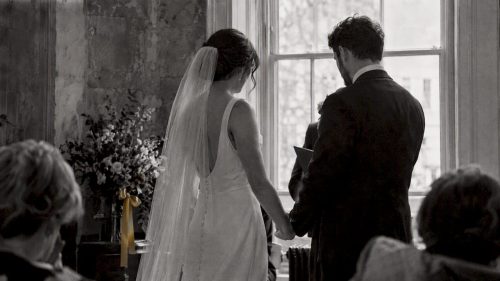
Black and white wedding photos work best on the moments that run on emotion, light and expression: the first look, the vows, a parent’s tears, the dance floor in low light. They work less well where colour is the story, such as florals, a bold dress or a vivid venue. Most couples are happiest with colour as the main body of the gallery and monochrome used on purpose for a minority of images. Below we explain how to decide, which shots suit it, what it costs in the UK and what to agree with your photographer before the day.
TL;DR
- Black and white is a choice about emphasis. It removes colour so the eye goes to expression, light and composition.
- A common guide for an album is roughly 70 to 80% colour and 20 to 30% black and white, according to a 2025 study on how we perceive monochrome-1263-1277).
- Monochrome rescues difficult colour: mixed lighting, clashing backdrops, blotchy skin tones after a hot day.
- You do not pay extra for the look in itself. The average UK wedding photographer costs about £1,484, with London and the South East typically £200 to £500 higher, according to Bridebook.
- Ask your photographer to deliver both versions of your favourites, and to explain how they decide which frames go monochrome.
Table of Contents
- Why black and white still feels timeless
- When monochrome works best
- When to keep colour
- How much black and white should be in your album
- Black and white is a decision, not a filter
- What black and white wedding photos cost in the UK
- Our view: start with what the pictures are for
- Plan the day so monochrome has the best chance
- Working with LemonLens
- FAQ
- Sources
Why black and white still feels timeless
Monochrome carries a particular weight because it is not how we see. Research on 21st-century visual culture argues that choosing black and white is a deliberate step away from literal reality towards emotional depth, and that it asks the viewer to complete the scene imaginatively. The same 2025 paper-1263-1277) describes it as a filter that strips out chromatic distraction so form, composition and texture take over.
That has a practical consequence for weddings. A colour photograph is firmly dated: the bridesmaid dresses, the table runners, the shade of the groomsmen’s ties all say “this season, this year”. Take the colour away and what remains is a face, a gesture and the light on it. In thirty years your grandchildren will read the expression, not the trend.
The photojournalist James Nachtwey makes a related point in a BBC profile: most of his book Memoria is in black and white, though he says it was not always his preference. Documentary work is a different world from a wedding, but the instinct carries across. When colour starts to become the subject, it can pull attention away from the people.
When monochrome works best
Not every frame benefits. These are the situations where we would reach for black and white most readily.
Emotional, candid moments
A father seeing his daughter for the first time, a nervous laugh during the vows, a grandmother wiping her eyes. These images live in the face. Colour adds little, and black and white concentrates attention where it belongs. If you like the idea of unposed, documentary coverage, our guide to wedding photography styles explains how reportage differs from traditional and editorial approaches.
High-contrast light
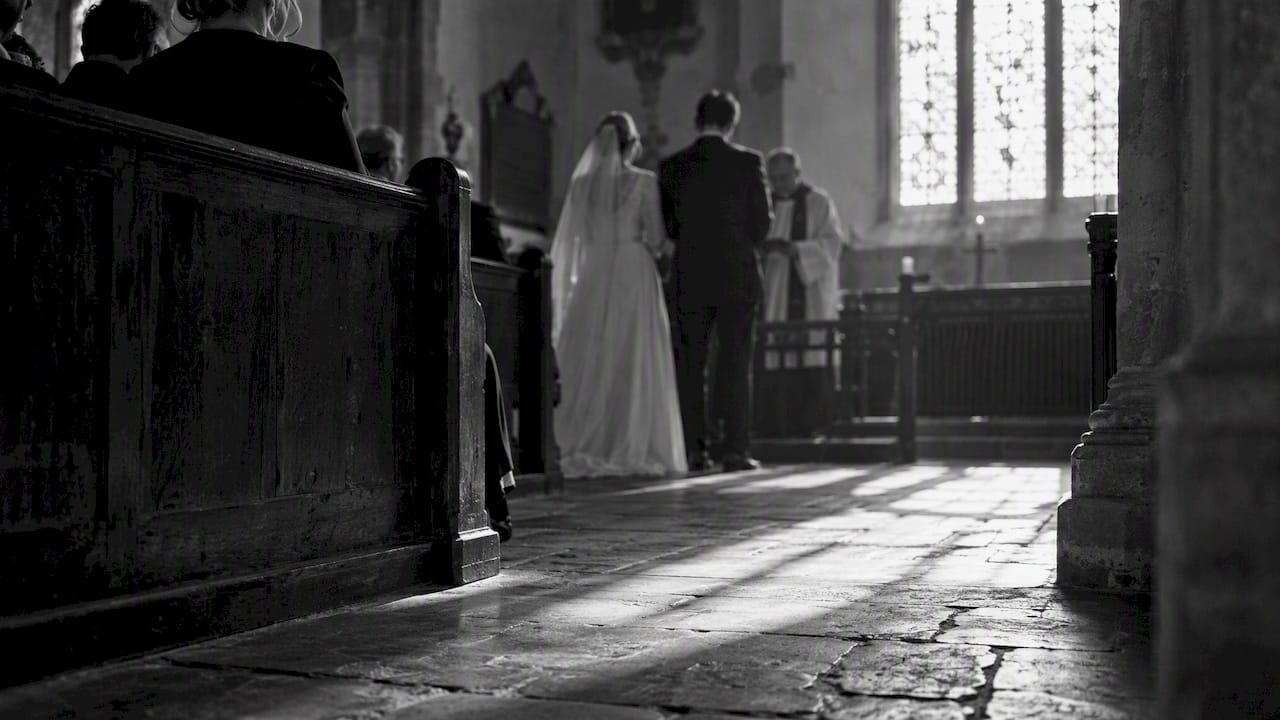
Shafts of light through a church window, backlit confetti, a registry office with strong side light from tall windows. Contrast gives monochrome its drama. Flat, overcast light in a grey car park gives it nothing, and a good photographer will not force it.
Low light and receptions
Evening receptions are where colour usually suffers. Mixed bulbs, uplighters in pink or blue and a DJ’s moving lights can throw odd colour casts across skin. Converting to black and white cleans all of that up and gives dance-floor pictures a classic, film-like look. The Knot also notes that monochrome can add a film-noir quality to reception shots.
Portraits and skin tones
High-definition colour is unforgiving. Sun-induced redness, blotchiness and uneven skin tone show up easily, and The Knot points out that black and white can soften those distractions. If you or your partner dislike how you look in colour pictures, say so in your first conversation. It is a perfectly good reason to ask for monochrome portraits.
Busy or clashing backgrounds
A venue with a loud carpet, a hall with mismatched signage, a marquee in a colour you did not choose. Monochrome unifies the frame. It is a quiet fix that a photographer can plan for on the day by choosing angles that suit it.
When to keep colour
There are moments where black and white throws away the very thing you paid for.
- Flowers and styling. You chose the palette. Keep it in the pictures of the bouquet, the table plan and the cake.
- Outdoor scenes with strong colour. Autumn leaves, a garden in bloom, a vivid sunset.
- Cultural dress and ceremony detail. Saris, kente, tartan, henna and many other traditions are carried by colour. Converting those images removes meaning, so keep them in colour.
- Details that tell a story. The something-blue, a family heirloom, a bright pocket square.
A useful test: look at the picture and ask whether the colour is information or decoration. If it is information, keep it.
How much black and white should be in your album
The 2025 study mentioned above gives a suggested album balance of roughly 70 to 80% colour and 20 to 30% black and white, so the monochrome stays striking rather than monotonous. Treat that as a starting point, not a rule. A winter wedding in a candlelit hall may swing further towards monochrome. A summer garden wedding with lots of florals will lean towards colour.
The same logic applies if you are planning a printed book. Because monochrome images stand out on the page, many couples use them as chapter openers or on facing pages with a colour image, so the contrast is deliberate. Agree this with your photographer before the album layout is designed, and ask whether you can approve the layout before printing.
A simple way to sort your favourites
- Go through your gallery quickly and mark every image you love, without thinking about colour.
- Look at each marked picture and ask whether the colour is helping. Mark those that are better without it.
- Check that the black and white picks are not all the same type of shot. A mix of portraits, candids and details reads better than thirty similar faces.
- Keep the colour version of each monochrome pick. Prints, a framed canvas and a social post may each call for something different.
Black and white is a decision, not a filter
Turning an image grey is easy. Making it work is not. A photograph that was shot with monochrome in mind has deliberate contrast, clean separation between subject and background, and considered highlights and shadows. A colour image simply desaturated can look flat and muddy, especially if the colour was doing the work of separating a bride in a cream dress from a pale wall.
This is why we suggest asking a photographer a few direct questions:
- Do you decide on black and white at the shoot or only in editing?
- Will I receive both colour and monochrome versions of the images you convert?
- Can I request particular frames to be converted afterwards?
- How do you edit for consistent tone across the gallery?
An answer that explains their thinking, rather than “I just add a preset”, tells you a lot.
What black and white wedding photos cost in the UK
The look itself is an editing choice and does not normally change the price. What changes the price is coverage, time, people and extras.
Bridebook’s 2026 figures put the average UK wedding photographer at £1,484, with London and the South East usually running £200 to £500 higher. The same guide describes budgets ranging from under £1,000 for half-day coverage to £3,000 or more for full-day premium packages with a second shooter and physical albums.
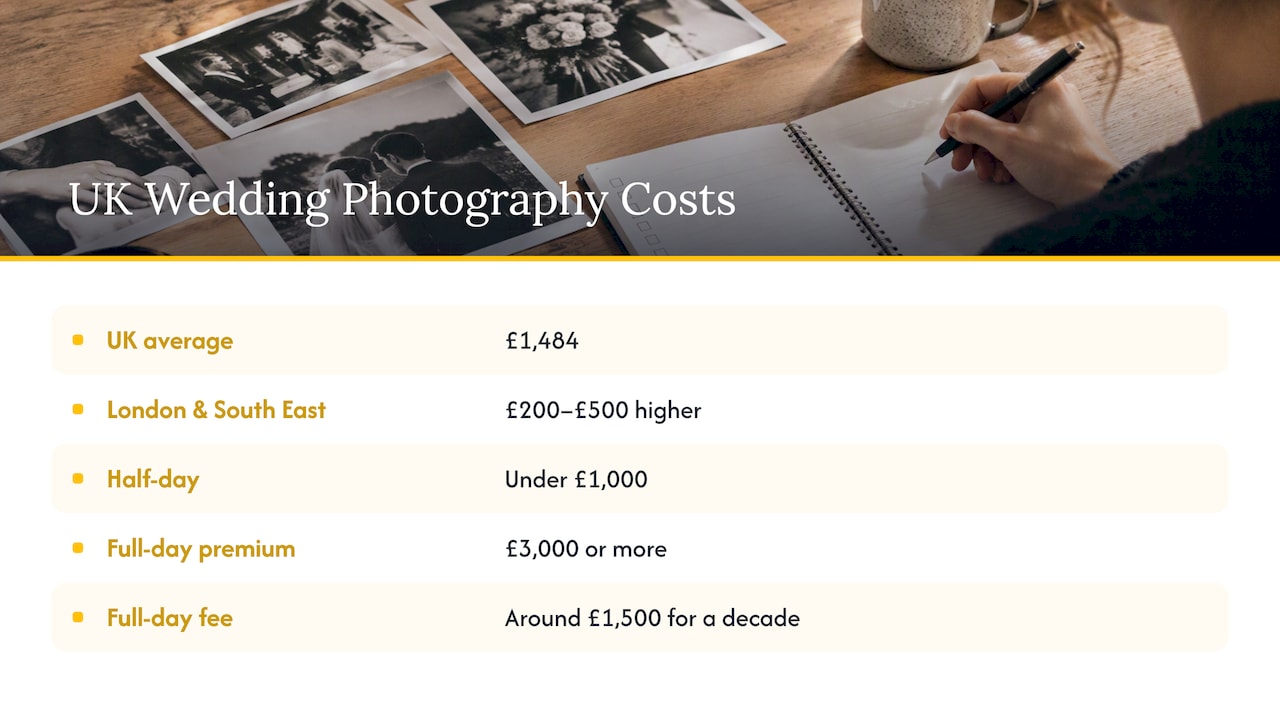
There is a caution in the market data too. Photography Farm reports that the average full-day fee has stayed around £1,500 for a decade, which means a real-terms fall as costs have risen. It also warns that very low quotes often fail to cover the 40-plus hours of post-production behind a fully retouched gallery. That matters for monochrome, because careful conversion and tonal grading is part of the editing time.
What to check in a quote
| Item | Why it matters for black and white |
|---|---|
| Hours of coverage | Evening dancing is where monochrome shines, so check it is included |
| Second photographer | More angles on candid moments |
| Editing | Ask whether conversions are hand-graded |
| Colour and mono versions | Confirm you receive both |
| Print release | Lets you print and share freely |
| Album | Whether it is included and how many layout revisions you get |
On rights: by default the photographer keeps the copyright. Most professional packages include a print release or personal usage licence that lets you print and share without limit, and buying full copyright is a separate, usually unnecessary transaction, as Bridebook explains. Read the contract so you know exactly what you can do with your black and white prints.
If you are planning something smaller, such as a micro wedding, shorter coverage can be enough and the budget goes further. Monochrome suits intimate days well, because there is less to photograph and more time to focus on the people.
Our view: start with what the pictures are for
We are a London photography and videography team, and we begin every booking by asking what the photographs are for. For weddings, the answer is usually simple: you want to remember how the day felt, and you want pictures you will still enjoy looking at in decades. Black and white earns its place when it serves that, and not otherwise.
Our approach is relaxed and directed. We guide people gently so they are comfortable, and we capture the in-between moments that never get a pose. Those are the frames that most often end up in monochrome, because the emotion is the point.
We would rather you ask for a few favourites to be converted than a whole gallery. A gallery in one tone loses the contrast that makes the monochrome frames feel special. If you are unsure, tell us which pictures you cherish most from other people’s weddings and what you like about them. That conversation tells us more than any style label.
You can see how we think about the day itself in our wedding photography timeline and shot list, both written for UK couples. Planning the schedule around good light is the most effective thing you can do for both colour and black and white results.
— Emmet
Plan the day so monochrome has the best chance
You do not need to be a photographer, but small decisions help.
- Light the ceremony well. Ask your venue about windows and where the light falls at your ceremony time. Our timeline guide shows how to build in time for portraits in good light.
- Allow time for portraits. Rushed portraits are flat. Ten unhurried minutes with a couple give a photographer expressions worth converting.
- Think about contrast in clothing. A cream dress against a pale wall has little separation in black and white. A darker suit or a coloured backdrop helps.
- Tell people the candid moments matter. Guests who relax produce the pictures that suit monochrome. A short word to the wedding party often helps.
- Use the shot list. Share your priorities from our wedding shot list so key moments are not missed.
If you are marrying at a registry office or town hall, light and space are tight, and monochrome can help with mixed lighting. We have written about a registry office wedding in Morden and Chelsea Town Hall if you want to see how we approach those rooms.
Working with LemonLens
Our weddings start from £1,850. We shape each one around what you want from the pictures, with a relaxed, unposed approach in London and the surrounding boroughs. If you would like some of your wedding in black and white, tell us in the first conversation and we will plan for it. See our wedding photography page for how we work, or get in touch through lemonlens.com.
Would you like film too? Our guide to ten questions to ask a wedding videographer covers what to check, including how a film can mix colour and monochrome.
FAQ
Is black and white good for a wedding?
Yes, for the right moments. It suits emotional candids, portraits, high-contrast light and evening receptions, where colour can be messy. Keep colour for florals, decor and culturally significant dress. Most couples choose a mix, not an all-monochrome gallery.
Why are wedding photos sometimes black and white?
There are three usual reasons. It removes colour distractions so attention falls on expression and light, it fixes awkward colour casts and blotchy skin tones, and it gives images a timeless look that does not date with fashion. A good photographer chooses it deliberately, frame by frame.
Can I ask for black and white copies of my favourite photos afterwards?
Usually, yes, but confirm it before booking. Some photographers deliver both versions by default, while others convert only on request. Ask about it in your contract, along with your print release, so you can print the monochrome versions freely.
How many black and white photos should be in a wedding album?
A widely suggested balance is about 70 to 80% colour and 20 to 30% black and white, based on a 2025 study-1263-1277). Adjust it to your venue and light. A dark winter venue might justify more monochrome, a garden wedding less.
Sources
- Wedding Photography Prices UK, Bridebook
- Psychological aspects of perception of black-and-white photography in the visual culture of the 21st century-1263-1277)
- Black and white vs colour wedding photography, The Knot
- The Price of Fear: Have UK Wedding Photography Rates Flatlined?, Photography Farm
- James Nachtwey: The last of the great photojournalists, BBC News