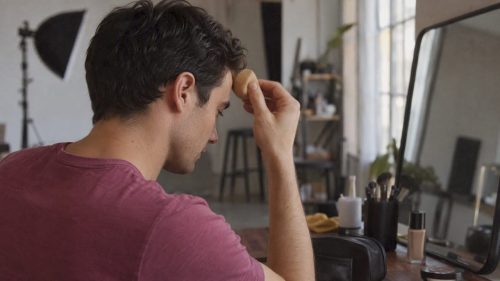
For camera-ready headshots, aim for natural, corrective makeup and tidy hair that keeps your face fully visible, and hire a professional if you can. A stylist who knows studio lighting will even out skin tone, calm shine and tidy hair without changing how you look. If a professional is not an option, follow a camera-focused routine, and arrive with essentials packed and two outfit choices ready.
TL;DR:
- Wash your hair the day before the shoot for better texture and hold, and avoid major cuts, color changes, or new styles beforehand.
- Skip sunscreen formulas with reflective particles, which can cause flashback under studio lights; use light foundation, neutral eye color, and powder to control shine.
- Check finished makeup under lighting similar to the photographer’s setup, because studio lights can change how colors and shine appear compared with daylight.
- Pack blotting papers, concealer, lip balm, brow gel, hairpins, and a brush; bring two outfits and arrive early enough to settle in.
Table of Contents
- What professional headshot hair and makeup actually does
- Day-before prep: skin, hair and wellbeing
- Right-before shoot: quick camera-ready checklist
- Step-by-step makeup routine for headshots
- Hair styling tips for headshots
- Quick guide to men’s grooming for headshots
- What to expect when you book a professional hair and makeup artist
- A note from our editorial perspective
- How we can help with your headshots
- FAQ
- Sources
What professional headshot hair and makeup actually does
Headshot artists are not aiming for a transformation. Their work is corrective and tidy-up focused: evening out skin tone, controlling shine, smoothing flyaways and defining brows and eyes just enough that the camera picks them up clearly. The goal, as experienced headshot artists describe it, is to help you look like the best version of yourself rather than someone else.
Camera lenses and studio lighting behave differently from daylight or a bathroom mirror. Shine reads brighter, shadows deepen, and texture that looks fine in person can appear uneven on a sensor. That is why professional hair and makeup work is adapted to the specific lighting and camera setup rather than copied from an everyday routine.
Done well, this preparation reduces how much retouching a photo needs afterwards and removes small distractions, a stray hair, a shiny forehead, a patchy eyebrow, so attention stays on your expression rather than on fixable details.
Day-before prep: skin, hair and wellbeing
What you do the day before a shoot often matters more than anything rushed on the morning itself.
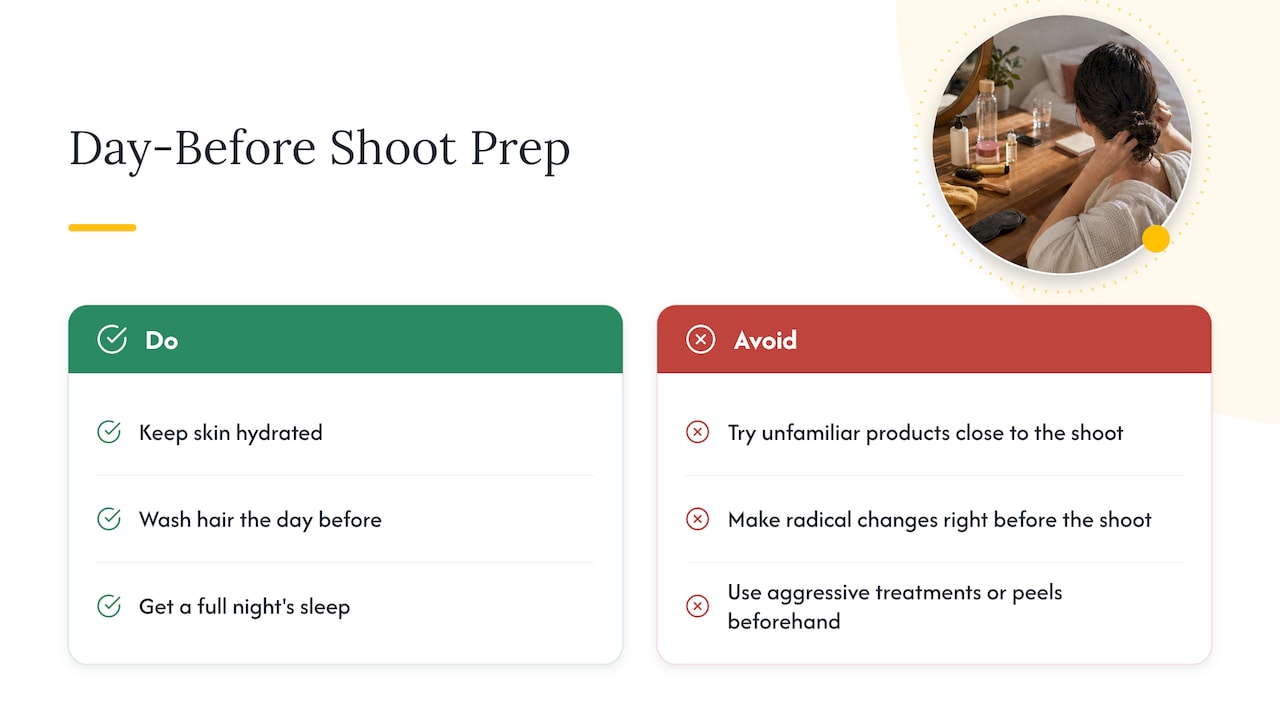
Keep skin hydrated and avoid introducing new aggressive treatments or peels in the days beforehand. A London-based makeup artist notes that skin preparation, including hydration and avoiding unfamiliar products close to the shoot, has a direct effect on how skin photographs.
Hair benefits from the same forward planning. Washing it the day before, rather than the morning of the shoot, tends to give better texture and hold, since freshly washed hair can be too soft to style and hold shape under studio lights. This is a widely shared tip among hair professionals preparing clients for photographic work.
Avoid a radical cut, colour or style change right before your shoot. Headshots work best when you look recognisably like yourself, so save any bold changes for well after the photos are taken. Beyond that, ordinary good habits help: a full night’s sleep, proper hydration and a sensible meal the evening before will show in your skin and your expression the next day.
Right-before shoot: quick camera-ready checklist
A short kit and a few quick actions just before stepping in front of the camera can make a noticeable difference.
Pack these essentials:
- Blotting papers to manage shine without disturbing makeup.
- A small concealer for last-minute coverage.
- A neutral lipstick or balm for quick reapplication.
- Clear brow gel to tame stray hairs.
- Hair pins and a compact brush for touch-ups.
On arrival, blot any shine, smooth hair back into place, dust a little powder over the T-zone, and rehydrate lips before the first frame. Bring two outfit options so you have a backup if one does not photograph as expected, and try to arrive with enough time that you are not rushing straight into the shoot feeling flustered.
Step-by-step makeup routine for headshots
A simple, ordered routine works better than layering products on impulse.
- Moisturise first, then apply a primer suited to your skin: mattifying if you run oily, hydrating if your skin leans dry, so you get a natural glow rather than flat, powdery skin.
- Apply a light-coverage foundation or colour corrector and blend thoroughly; skip SPF formulas with reflective particles, since they tend to cause flashback under studio lights.
- Define brows naturally and keep eye shading neutral; if you use mascara or false lashes, go cautiously, as heavy lashes can cast shadows on the eyelid under strong lighting.
- Finish lips in a neutral tone, or slightly stronger if the role or brand calls for it, then set everything with powder to control shine and a light setting spray to hold it in place.
Pro Tip: Check your finished makeup under lighting similar to what the photographer will use, not daylight or a bathroom bulb, since colours and shine read differently under studio lights.
Hair styling tips for headshots
Hair should frame your face, not compete with it.
- Smooth flyaways and frizz with a small amount of product rather than a heavy-hold spray, which can look stiff or shiny on camera.
- Shape hair gently around the face so it adds structure without covering your eyes or obscuring your features, in line with UK photographic standards for identity photos, which specify that hair must not cover the eyes and that shadows on the face are avoided.
- Save any dramatic style change for another day. Headshots reward consistency with how you normally look.
- Wash hair the day before the shoot for better texture and hold, then use dry shampoo on the day itself if you need to refresh volume or absorb any oil.
- Keep pins on hand to secure loose strands quickly between shots.
Quick guide to men’s grooming for headshots
A short, focused grooming routine covers most of what men need. Mattify skin to cut shine, tidy facial hair into a clean line, and neaten eyebrows so they look intentional rather than overgrown. Keep the hairline looking natural and use a matte styling product, since gel or wax with shine can read as greasy on camera. A five to fifteen minute grooming slot, whether self-managed or handled by a professional artist, is usually enough to get camera-ready.
What to expect when you book a professional hair and makeup artist
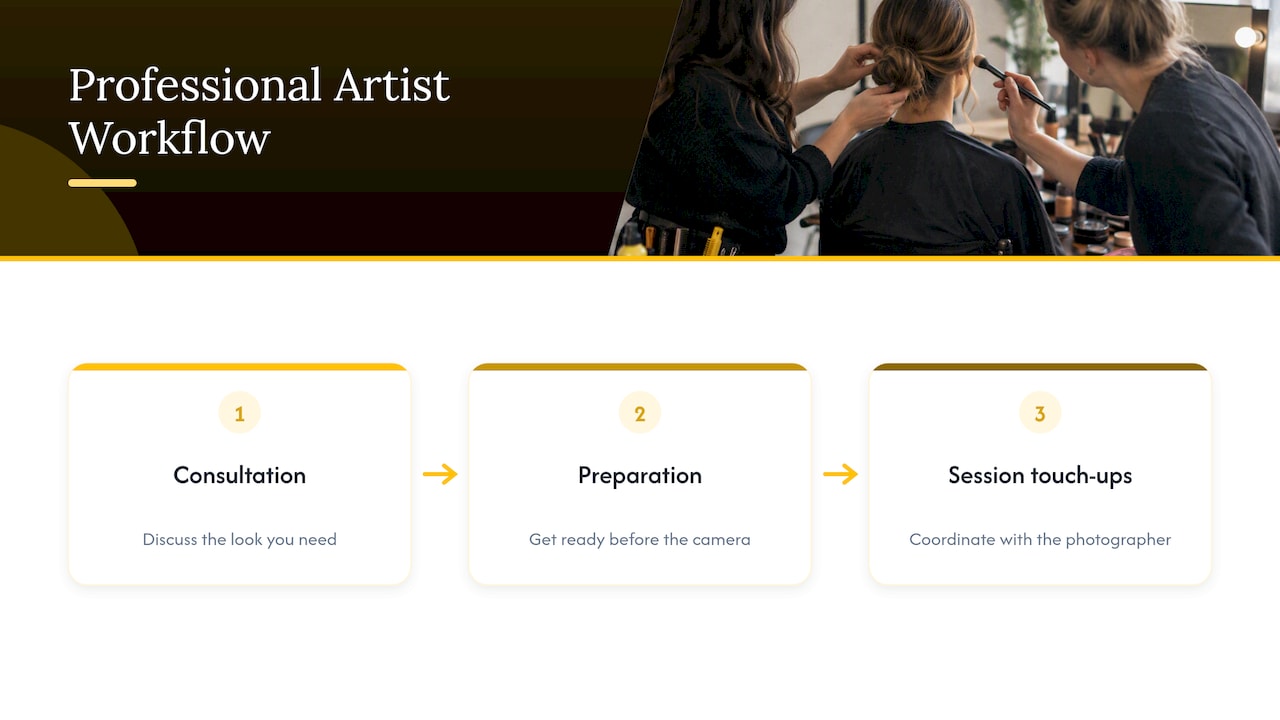
Booking a professional usually follows a simple flow: a short consultation about the look you need, a prep window before the camera comes out, and touch-ups during the session itself, coordinated directly with the photographer so hair and makeup hold up shot to shot. Professional artists tailor their work to the lighting and camera in the room, which is part of why fewer distracting elements, stray hairs, shine, uneven tone, make it into the final frames.
For sessions such as LinkedIn-focused portraits or group bookings for teams, the schedule is built around preparation time, alongside a fast turnaround and purpose-led approach applied to every shoot.
A note from our editorial perspective
Headshots work when the person in them is still recognisably themselves, just calmer and more polished. That is the only standard worth chasing: a likeness with purpose, not a mask.
— Emmet
How we can help with your headshots
We offer studio sessions, LinkedIn-focused portraits, and group bookings for teams, all built around the same camera-ready preparation covered above. Browse The Solo, The Brand, The Team to see what fits and book your session.
FAQ
What kind of makeup should I use for a professional headshot?
Choose natural, corrective makeup: light-coverage foundation, neutral eyes and lips, and matte powder to control shine. The focus should stay on evening skin tone and reducing distractions rather than creating a dramatic look, as professional headshot artists typically advise.
Which country is best to study makeup artist?
There is no single country that is officially recognised as the best place to train as a makeup artist, since standards and reputations vary by institution rather than by nation. In the UK, accredited routes such as the Make-up Artistry qualification for TV, film and theatre give a recognised path into professional work.
Do makeup artists also do hair?
Many headshot and photographic makeup artists also handle hair styling, since the two are usually prepared together for a shoot. It is worth checking with the individual artist or studio, as scope can vary from one booking to another.
Can I wear makeup in my UK passport photo?
Yes, you can wear makeup in a UK passport photo, provided your face remains clearly visible and natural. Passport photo requirements call for a neutral expression, open and visible eyes, and no hair covering the face, so heavy or dramatic makeup that obscures your features is best avoided.
Sources
- Photographic standards for identity documents (UK government)
- Corporate headshot hair & makeup — CJC Hair & Makeup
- 5 essential tips for professional headshot makeup and hair — Terri Pace