The right photographer for a queer book launch in London is one who can work a room quietly, treat consent as part of the job, and deliver usable images within days. For that you want an event photographer with experience of LGBTQ+ community nights, not a general portrait studio and not a friend with a good phone. Event coverage at LemonLens runs from £400 to £900, depending on the shape of the night, and we deliver event images within 48 hours.
This guide covers what a photographer actually shoots at a launch, how to handle guests who do not want to be pictured, what to ask for in writing, and how the realistic options compare.
TL;DR
- Book a photographer who has covered queer or LGBTQ+ events and will agree a consent plan with you before the night.
- Brief them on the run of the evening: empty room, reading, conversation, signing queue, portraits. The signing queue produces most of the images you will use.
- Agree deliverables, turnaround and usage rights in writing. Ask for a licence covering the author, publisher, venue and press.
- Expect to pay from a few hundred pounds for a short launch. LemonLens event coverage is £400 to £900, with images back within 48 hours.
- Tell guests photography is happening, and give people an easy, visible way to opt out.
Table of Contents
- What a photographer covers at a queer book launch
- Consent and privacy for LGBTQ+ guests
- Comparing your realistic options
- What to ask any photographer before you book
- Deliverables, rights and turnaround
- What it costs in London
- Our perspective
- Book coverage for your launch
- FAQ
- Sources
What a photographer covers at a queer book launch
Launches in London tend to follow a familiar arc, and a good brief follows it too. At The Photographers’ Gallery, a recent publication launch for London Dyke Deck combined a presentation, a conversation, copy signing and an invitation for guests to make live portraits. A separate Flora Dunster launch was built around an author presentation, an in-conversation session and a signing. Those are published programmes, and your night will have its own variation, but the building blocks are the same.
A photographer should plan for these moments.
Before the doors open
The empty room is the only time you get clean pictures of the space: the book stacked on the signing table, the banner, the flowers, the screen. Venues also set limits here. A bookshop or gallery space such as the one described on the PhotobookCafe gallery hire page offers table space for display and signings plus a screen for visuals, which means the photographer needs to know early where those sit so they can shoot them styled and tidy, before guests arrive.
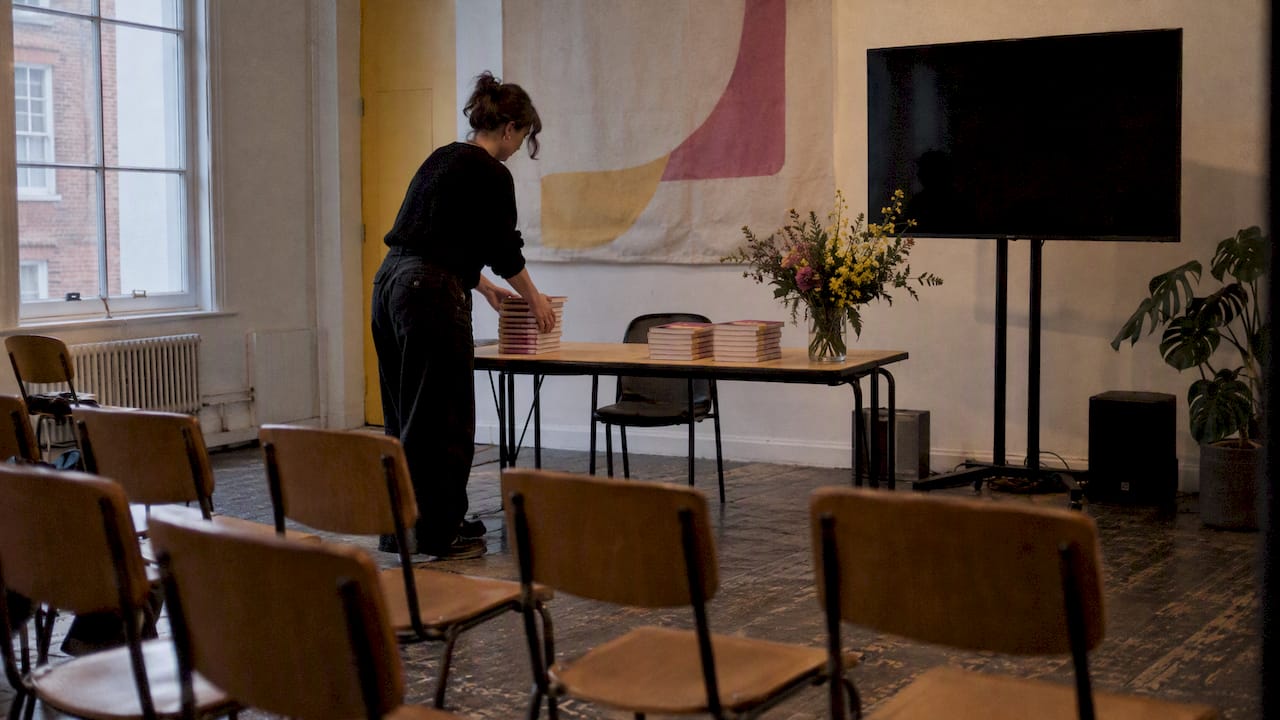
Fifteen to twenty minutes is usually enough. Do it first, and do not let it eat into the evening.
The reading or conversation
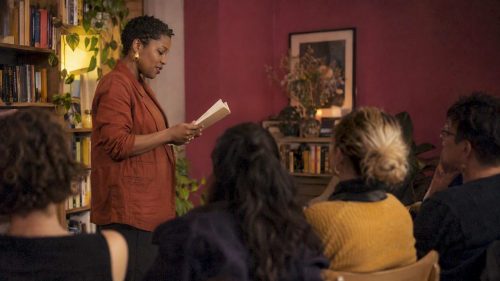
This is the hardest part technically. Lighting is often dim and uneven, the author is lit by a lamp or a projector, and silence means a shutter noise carries. A photographer who works with quiet shutters, longer lenses and no flash during the reading will give you images of the author mid-sentence and the audience laughing, not a row of squinting faces.
The signing queue
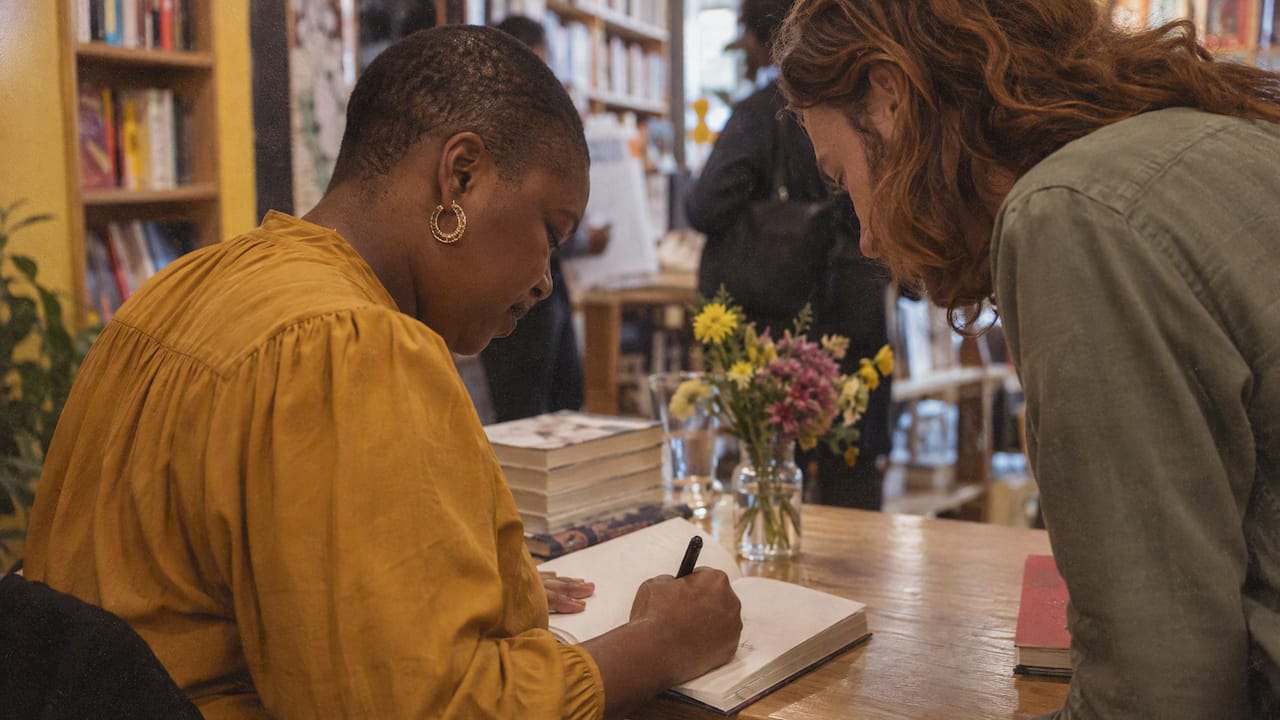
The signing is where the event photographs that matter usually come from: the author with a reader holding the book, a friend leaning in, a dedication being written. These are the images that go in a publisher’s newsletter, an author’s Instagram and a follow-up article. Ask the photographer to prioritise them and to offer every guest a quick, optional picture with the author.
Portraits and group shots
If there is a participatory element, such as live portrait-making, the photographer’s job changes: they document it rather than lead it. If there is not, a short, optional portrait corner works well. Set it away from the bar and the queue so people can choose it, not stumble into it.
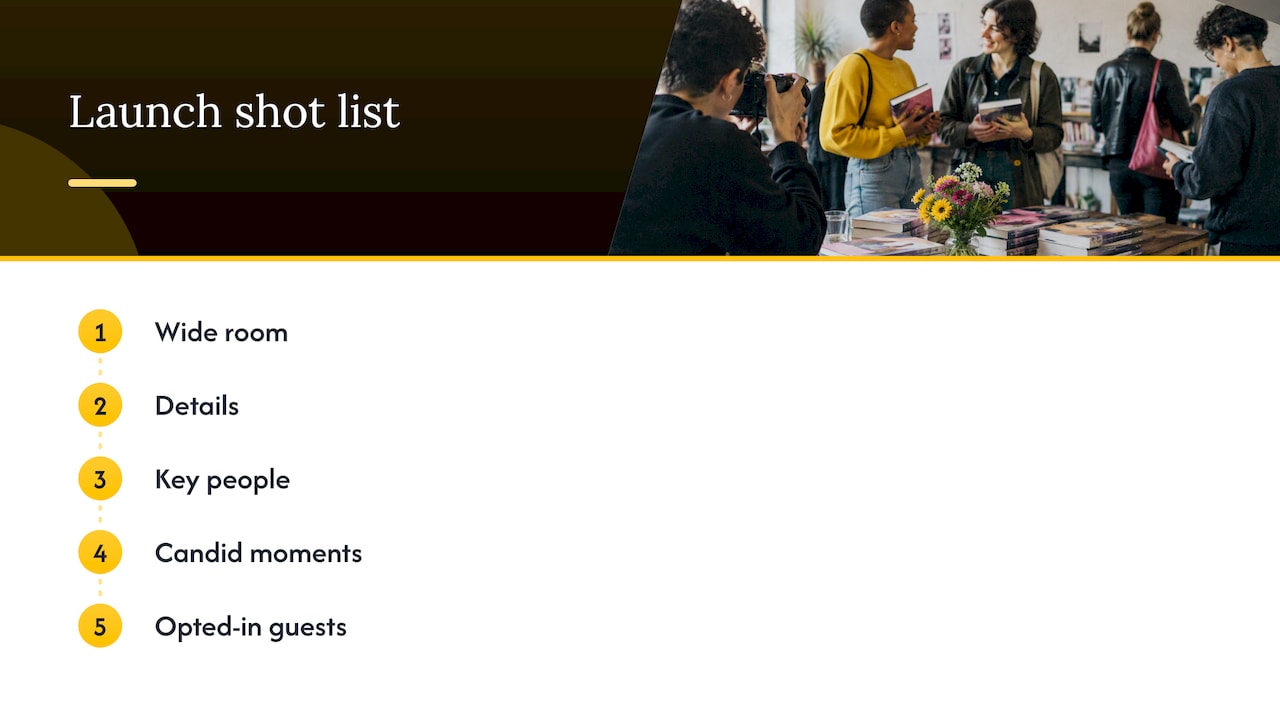
A simple shot list helps. Our LGBTQ event photographer page shows how we approach queer nights, and the same logic applies to a launch: wide room, details, key people, candid moments, then guests who have opted in.
Consent and privacy for LGBTQ+ guests
A queer launch draws people with very different levels of openness. Some guests are out everywhere. Others are out only in this room. A photograph posted online can end that, so consent is not paperwork here; it is the core of the job.
The Trans Journalists Association says informed consent is critical when photographing trans and gender-expansive people, to avoid outing them and potentially placing them in physical danger. Its guidance also advises against assuming anyone’s identity from the fact they are at an event, and recommends descriptive rather than labelling language in captions when you are unsure (TJA guidance on photographing trans sources). That applies directly to captions on your social posts: write “guests at the launch”, not a list of assumed identities.
In practice, a workable approach looks like this:
- Announce photography in the invitation, on the door and from the stage at the start.
- Say how images may be used: your website, the publisher’s social channels, press.
- Offer a visible opt-out. Community event guidance from the City of Greater Sudbury in Canada suggests stickers or wristbands as opt-out indicators, alongside signage and announcements. It is not a UK source, but the mechanism is simple and works in any room.
- Brief the photographer on the opt-outs so they know to avoid those guests in the frame, including in the background of key shots.
- Offer a no-photo zone, such as a corner or a side room, for people who want a break. One author’s launch planning notes describe hiring a second room as a quieter space for guests who wanted a break from the noise.
On the legal side, UK guidance treats identifiable photographs as personal data. The University of Edinburgh notes that publishing identifiable photographs online counts as an international data transfer and needs consent as a safeguard. A UK council protocol similarly requires consent for publicity images where people are identifiable and are the subject or prominent in the picture (Royal Borough of Kensington and Chelsea protocol). If your launch is run by a publisher or an institution, check their own data protection policy before the night. If you are unsure what applies to you, ask the publisher’s data protection lead or the venue.
Comparing your realistic options
Most organisers choose between five routes. None is wrong for every launch; they suit different nights.
| Option | Best for | Strengths | Watch for |
|---|---|---|---|
| LemonLens | Launches where you want purposeful, usable images fast | Directed, purpose-led approach; 48-hour event delivery; published pricing from £400 to £900 for London events; experience with queer community nights | Book early for popular evenings |
| Photographer who specialises in queer portraiture | Launches with an art or photobook slant | Deep community knowledge and a strong personal style | Style may be portrait-led rather than full-event coverage; check event experience and turnaround |
| Venue’s in-house or recommended photographer | Launches at galleries or bookshops with existing arrangements | Knows the room and the lighting | May not know the queer community; usage terms may favour the venue |
| Hourly press or PR photographer | Short, press-focused launches | Quick to book, clear hourly pricing | Often built for press calls, so fewer candid moments and less sensitivity to guests |
| Friend or volunteer with a camera | Very small, informal launches | Cheap, trusted by the room | No licence agreement, uneven results in low light, awkward when they also want to attend |
Where we fit
LemonLens is a London photography and videography studio covering portraits, weddings, events and brand content. Every booking starts with clarifying what the photos are for, which for a book launch is usually a mix: publisher marketing, author social posts, press, and a record for the community. That purpose decides what we prioritise on the night, which is why we ask about it before anything else.
If your launch has a press element, our PR photographer page shows how we cover press calls. If it is a smaller community evening, our Peckham FEELD night and East London Distillery event pages show the atmosphere and the kind of coverage we deliver.
What to ask any photographer before you book
The questions below separate people who have shot a room full of readers from people who have shot a wedding and are hoping for the best.
- Have you photographed queer or LGBTQ+ events? Ask for a gallery, not a claim.
- What is your consent approach? A good answer mentions announcements, opt-outs and care over captions.
- How do you shoot a reading in low light without a flash?
- How many images will I get, and when? Ask for the number range and the turnaround in writing.
- What licence do I receive? Who can use the images, for what, and for how long?
- What is your backup if you are ill? Ask about second-shooter arrangements or a replacement.
- Are you insured? Many venues ask for public liability cover.
A good brief helps too. Event-photography briefing guidance suggests sending the venue, timings, speakers, VIP names, required group shots, room details and delivery requirements ahead of time. For a book launch, add the author’s name and book title, the publisher contact, anyone who must not be photographed, and the three or four pictures you absolutely need.
Deliverables, rights and turnaround
Public detail on this is thin, so here is how we work, and what we would expect from any professional.
Deliverables. A launch gallery should normally include the room before guests arrive, the author in the reading or conversation, the signing queue, guests with the author, and candid moments. Colour-graded, web-ready files are standard. Ask for a small set of highlights for quick posting, then the full gallery.
Turnaround. Launch images age fast. Publishers and authors want to post the next morning. We deliver event images within 48 hours, and we think that is a sensible benchmark: if a photographer cannot tell you a date, ask again.
Usage rights. Paying for a photographer does not automatically mean you own the pictures. Agree a licence in writing that covers the author’s own channels, the publisher, the venue, press and future editions or promotion. If you want to hand images to other organisations, say so up front. Ask for the terms in the quote, not afterwards.
Sharing with guests. After the night, guests will want their own photos. A secure gallery link beats a public album, because it keeps the people who opted out out of public view. A guide on secure event photo sharing for UK organisers explains how password-protected galleries and upload windows can help you share images responsibly and control who sees them.
What it costs in London
Book-launch photography has no standard price, so compare quotes on what is included, not on the headline figure. Hours covered, number of photographers, delivery speed, edited image count and usage rights all move the price.
Our published prices, as listed on our site:
| Service | Price |
|---|---|
| London event photography | £400 to £900 |
| Corporate half-day | From £350 |
| Corporate event day rate | From £650 per day |
| Portraits | From £200 |
For most launches, a two to three hour evening falls under our London event photography service. A launch tied to a company or publisher’s day of events may suit the corporate event rates better. If you also want author headshots for the jacket or press kit, portraits start at £200. Final quotes depend on duration, location and what you need, and we confirm them before you commit.
Anything under about £100 for an evening is likely a favour or a beginner. That is fine for some events, but check the licence and delivery date.
Our perspective
We think the best launch photographs are decided before the night, in the conversation about what the pictures are for. A launch is not a wedding and not a gallery opening. It is a moment of visibility for a book and for a community, and photographs can either honour that or expose people who did not ask to be exposed.
So we start with purpose and consent. Who needs to see these images? Which guests are comfortable being seen? What does the author need by tomorrow morning? Then we plan the shoot around those answers, not around a generic shot list. Fast delivery matters because the news cycle of a launch is about two days long.
We would rather tell you plainly that a smaller launch can do with a shorter booking than sell you a long one. Intentional images mean the right ones, not the most.
— Emmet
Book coverage for your launch
If you are planning a queer book launch in London and want a photographer who will agree consent, shot priorities and delivery before the night, tell us about your event. We will confirm a quote, the licence and the delivery date. Our guide to hiring a queer photographer in London has more on what to ask. If you want highlights video from the night, we also offer event videography.
FAQ
How early should I book a book launch photographer in London?
As soon as you have a date and venue. Evenings in the publishing and Pride calendar fill up, and a photographer needs time to learn the room and agree your consent plan. A few weeks is a sensible minimum, though we do take shorter-notice requests when diary space allows.
How long does a photographer need to stay at a book launch?
Two to three hours covers most launches: a short setup before the doors, the reading or conversation, and the signing. A longer booking helps if you have a press arrival, a VIP list or an after-party. Agree start and end times in the quote.
Do I need guests’ permission to publish launch photos?
In the UK, identifiable photographs count as personal data, and guidance from UK councils and universities points to consent where people are identifiable and prominent. At a queer event, take extra care, because publishing a photo can out someone. Announce photography, offer an opt-out and keep captions descriptive.
Can I use the photos for the publisher and press?
Only if your licence says so. Ask the photographer to name the author, publisher, venue and press in the licence before the event, so nobody needs to request permission later.
Sources
- Publication Launch, Talk & Live Portrait Making: Ellen Kydd, London Dyke Deck (The Photographers’ Gallery)
- Book Launch, Talk & Signing: Flora Dunster (The Photographers’ Gallery)
- Gallery Hire (PhotobookCafe)
- How to photograph trans sources without putting them at risk (Trans Journalists Association)
- Best Practices for Photography and Video at Community Events (City of Greater Sudbury)
- An author’s guide to planning a book launch (All Things IC)
- Photography and data protection (University of Edinburgh)
- Council photography and video usage protocol (Royal Borough of Kensington and Chelsea)
- Good Briefing for Event Photographers (BRD)
- Secure event photo sharing: a guide for UK organisers (SnapPix)