
Kyoto Garden in Holland Park is where you’ll find the best of these photos: free to enter, open daily from 7:30am until dusk, and fair game for personal photography on your phone or camera. Professional or commercial shoots need written permission from the Royal Borough of Kensington and Chelsea first. Go early on a weekday, ideally during the late March cherry blossom or the autumn maple turn, and you’ll have the koi pond largely to yourself.
TL;DR:
- Visiting early on a weekday morning provides the best light and minimizes crowds, especially during cherry blossom or autumn leaf seasons.
- Tripods are not allowed for casual visitors, so stability for long exposures requires bracing against a wall or capturing multiple shots for blending.
- Professional shoots need written permission, are limited to three crew members, and cannot use tripods or lighting equipment, with restrictions on weekends and busy periods.
- Self-taken photos are generally owned by the photographer unless commissioned, and commercial use requires proper licensing or a license from Getty Images.
- Hiring a local photographer simplifies permits, timing, and crowd management, with packages starting at £200 for solo portrait sessions.
Table of Contents
- Best spots for Kyoto Garden photos and shot ideas
- How do you get the best light and stay within the rules?
- Who owns your Kyoto Garden photos, and where can you licence others?
- Visiting the garden yourself or booking a local photographer
- Why hire a local photographer for a Kyoto Garden shoot
- A photographer’s honest note on shooting Kyoto Garden
- Book a Kyoto Garden photo session with LemonLens
- Sources
- FAQ
Best spots for Kyoto Garden photos and shot ideas
The garden sits on under an acre of land, but it packs in more photogenic detail per square metre than most parks in London. That density is exactly what makes it worth planning a shortlist before you arrive, rather than wandering and hoping.
The tiered waterfall at the garden’s edge is the obvious centrepiece, and it rewards patience more than gear. Shoot it at a slower shutter speed to soften the water into a silky blur, then come back with a faster shutter to freeze individual droplets against the rock. Either version works; shooting both gives you options later.
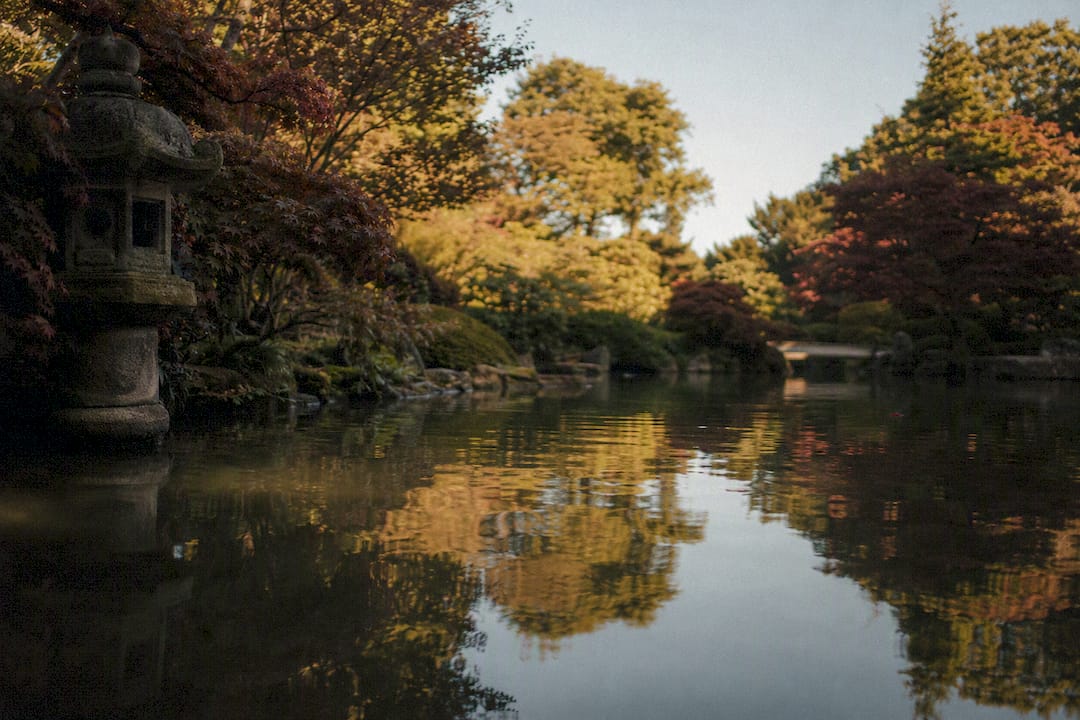
The koi pond beneath it does double duty. Still mornings give you glass-flat reflections of the maples and stone lanterns, while the fish themselves add colour and movement when the light hits the water at an angle.
A few more subjects worth building into a shot list:
- Stone lanterns framed against foliage, shot low to exaggerate their height
- The wooden bridge, both as a leading line and as a subject from the water level
- Peacocks, which roam freely and photograph best against the garden’s darker green backdrops
- Japanese maples in close-up detail during their autumn colour change
- Wide establishing shots taken from the higher path looking down over the whole garden
- Macro shots of moss, bark, and stone texture when the wider scene is too crowded to shoot cleanly
Pro Tip: Arrive at opening time. The garden is small enough that even twenty extra visitors change the character of every wide shot, and the koi pond reflections disappear the moment foot traffic starts stirring the water.
How do you get the best light and stay within the rules?
Timing matters more than equipment here. VisitLondon recommends early weekday visits for both the light and the lack of crowds, and that advice holds up on the ground. Midday sun is harsh and flattens the garden’s texture; early morning and the last hour before dusk give you softer shadows and warmer tones.
For gear, a phone with a recent computational HDR mode handles the pond reflections surprisingly well, since it can balance the bright sky against the darker water in one frame. If you’re shooting on a mirrorless or DSLR, a mid-range zoom (roughly 24 to 70mm) covers everything from the wide garden shots to tighter portraits of lanterns and maples without needing a lens change mid-visit.
Tripods are not permitted for casual visitors, and that rule extends further for professional shoots. If you need a stable long exposure for the waterfall, brace against a railing or a low wall instead, or shoot several handheld frames and blend them later.
The professional rules are stricter and worth knowing before you plan a paid shoot:
- You need formal written permission from the council before bringing any organised or commercial shoot into the garden.
- Crews are capped at three people, which rules out larger production setups.
- All equipment must be handheld. Tripods, lighting rigs, and reflector stands are not allowed.
- Weekends and bank holidays during busy periods carry additional restrictions or may be refused outright.
- Shoots must not obstruct other visitors, which in practice means short sessions and constant awareness of who’s walking through your frame.
Operators who get permission approved quickly tend to propose the smallest possible footprint: one or two people, handheld cameras, a tight weekday morning slot. That approach matches what the council is actually trying to protect, which is public access to a small, popular space.
Who owns your Kyoto Garden photos, and where can you licence others?
Photographs you take yourself in a public garden are generally protected as your own artistic work under UK copyright guidance, meaning you decide how they’re used and shared. That changes the moment someone else is commissioned to take them for you.
A few distinctions matter in practice:
- Personal photos for your own use or social media carry no special licensing requirement.
- Commissioned work, such as a paid photographer’s session, usually transfers rights according to the contract, so it’s worth clarifying who owns the final images before booking.
- Using someone else’s Kyoto Garden photo commercially, on a website or in an advert, needs a proper licence, not just a screenshot.
- If you want ready-made high-resolution images rather than shooting your own, Getty Images hosts a licensable collection covering the garden across different seasons.
Visiting the garden yourself or booking a local photographer
If you’re deciding between shooting the garden yourself and hiring someone to do it properly, the practical differences come down to access, control, and what you walk away with. Kyoto Garden itself costs nothing to enter and needs no booking, but it also means you’re working within the handheld, no-tripod rules like everyone else. A local photographer familiar with the council’s permit process can plan around those constraints and deliver a directed session rather than a series of opportunistic phone shots.
| Option | Google reviews | What it offers | Starting price |
|---|---|---|---|
| LemonLens Photography | 5★ (56 reviews) | Portrait, event, and location photography with purpose-led direction and fast delivery | From £200 |
| Kyoto Garden (Holland Park) | 4.7★ (thousands of reviews) | Free public access for self-guided photography | Free entry |
Kyoto Garden is the better fit if you’re happy shooting solo, working within the handheld rule, and you don’t need a portrait session or professional direction. LemonLens Photography suits anyone who wants a proper location shoot: engagement photos, a small editorial session, or portraits where someone else handles composition, timing, and the permission logistics.
Why hire a local photographer for a Kyoto Garden shoot
Booking a photographer who already knows the site removes the guesswork around permits, timing, and crowd management. The service delivers event photos promptly and publishes transparent starting prices across its portrait packages, so there’s no ambiguity about cost before you commit.
- The Brand package covers more directed, purpose-built imagery for professional use
- Past location work includes a family shoot at Fulham Palace’s gardens, a comparable green-space setting to Holland Park
- Broader event experience spans everything from a Kings Cross gig to Pixel Pony rave photography, showing range across very different lighting conditions
A photographer’s honest note on shooting Kyoto Garden
Arrive before nine on a weekday and the garden feels genuinely calm, almost private. Wait until midday on a Saturday and you’re queuing for the bridge shot with fifty other phones.
— Emmet
Book a Kyoto Garden photo session with LemonLens
LemonLens is the alternative to turning up with your phone and hoping for the best: a directed, purpose-led session where every frame is planned around what you actually need the photos for, whether that’s an engagement shoot, a brand portrait, or a small editorial project in Holland Park. Every booking starts by clarifying that purpose first, then builds the shoot around it, with images delivered fast enough to still be relevant when you need them. Transparent pricing means you know the cost before you book, not after a vague quote arrives days later. Visit the portrait services page to see package pricing, or check London event photography if you’re planning something larger than a solo or couples session, and get a session booked in.
Sources
- Holland Park | Royal Borough of Kensington and Chelsea
- Kyoto Garden in London: A guide for first-time visitors — VisitLondon
- Gov
- Kyoto Garden Holland Park stock photos — Getty Images
FAQ
Is Kyoto Garden London worth visiting?
Yes. Its tiered waterfall, koi pond, stone lanterns, and Japanese maples make it one of the most photogenic small gardens in London, and it costs nothing to enter.
Is there a Japanese Kyoto Garden in London?
Yes, it’s inside Holland Park in west London, donated by the Kyoto Chamber of Commerce and opened in 1992. It remains one of the only authentic Japanese-style gardens open to the public in the capital.
Do you have to pay for Kyoto Garden London?
No, entry is completely free and the garden is open daily from 7:30am until dusk. Professional or commercial photography shoots do require paid or approved permission from the council, separate from general entry.
What is the nearest tube station to Kyoto Gardens?
Holland Park station on the Central line is roughly a three-minute walk from the garden. High Street Kensington, served by the Circle and District lines, is about six minutes away on foot.
How much does LemonLens charge for a Kyoto Garden portrait shoot?
LemonLens Portrait sessions start at £200 for The Solo package, with The Brand package at £500 for more involved, purpose-led imagery. Exact pricing depends on the session type and length, so check the portrait services page for full details.