
This guide gives you curated, inclusive same sex wedding photo ideas and a practical shot list you can hand straight to your photographer, drawn from shoots run by LemonLens and notes from photographer Emmet. There are no fixed rules here, only prompts built on authentic movement and non-gendered direction, so the images look like you rather than a template.
TL;DR:
- Couples should focus on organizing group shots by relationship rather than gender to avoid traditional lineups and create more natural arrangements.
- Using action-based prompts like walking or turning helps generate authentic expressions and avoids gendered assumptions in posing.
- Planning a timeline that includes key moments such as preparation, ceremony, and post-ceremony portraits ensures coverage of meaningful moments without disrupting the flow.
- Photographers should prioritize candid, in-the-moment shots and micro-movements to highlight genuine emotion rather than rigid, posed images.
- Choosing a supplier who practices inclusive direction and understanding of LGBTQ+ themes results in more authentic and respectful wedding photographs.
Table of Contents
- Visual inspiration: shot categories and concrete ideas
- Posing, composition and lighting that feel like you
- How to plan the photo coverage without losing the day
- Real weddings: two shoots that show these ideas in practice
- Photographing queer joy without a script
- Booking inclusive wedding photography with LemonLens
- Sources
- FAQ
Visual inspiration: shot categories and concrete ideas
Think in categories rather than single poses. A strong wedding album mixes portraits, ceremony coverage, candid moments, group shots and detail photos, and each category has a handful of prompts that work regardless of who is marrying whom.
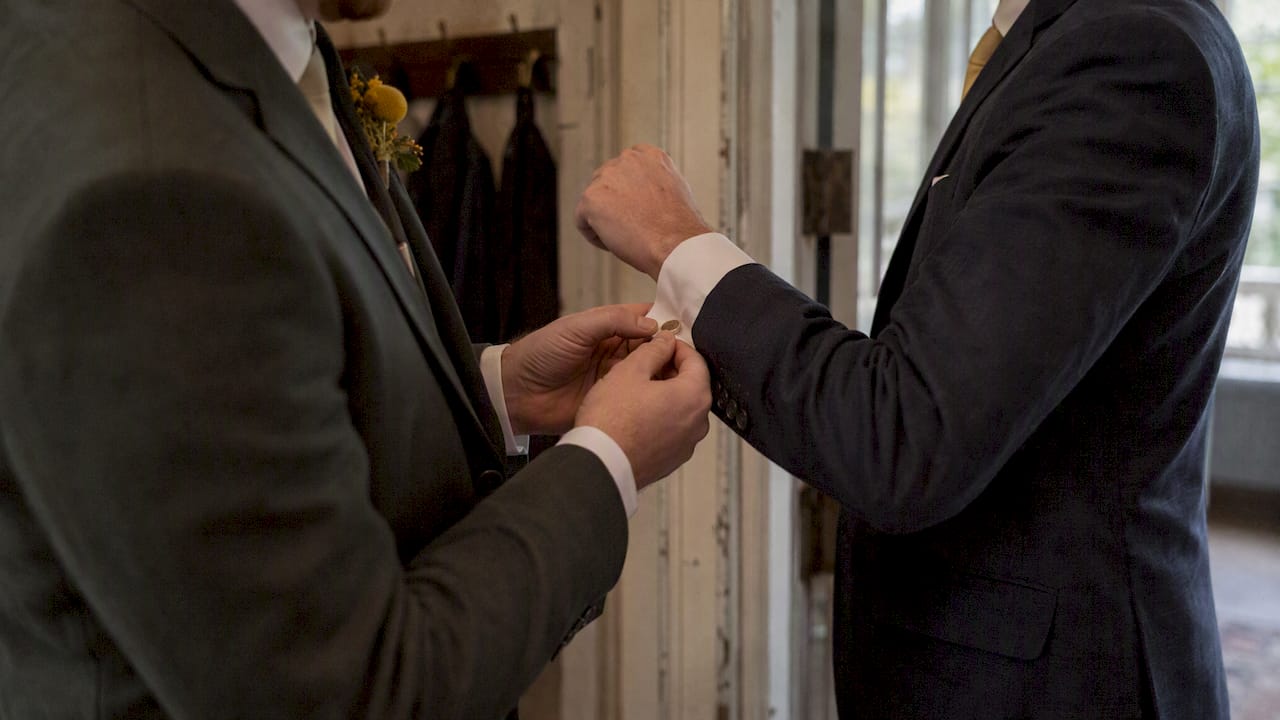
Portraits split into three useful styles: classic (facing the camera together, hands joined, foreheads touching), environmental (walking away from the venue, framed by a doorway or staircase) and close-up (just the hands, just the eyes, just the rings mid-exchange). Ceremony shots should cover the entrance, whichever form it takes, the vows themselves, and the reactions of guests, since those candid faces often outlast the formal shots in sentimental value. Documentary moments are worth protecting time for: getting ready, a quiet exchange of letters or gifts before the ceremony, the first unscripted laugh of the day.
Group and family arrangements work best when they are organised by relationship rather than by gender, which avoids the old habit of lining up “bridesmaids” on one side and “groomsmen” on the other. Detail shots, the invitation suite, shoes, a shared playlist printed on card, a grandparent’s ring, give the album its personality.
- Entrance or processional, however you choose to walk in, together or separately
- Vow exchange from both close and wide angles
- Unscripted guest reactions during speeches or the first dance
- Family and friend groupings organised by closeness, not gender
- Flat-lay or detail shots of rings, outfits and personal keepsakes
Posing, composition and lighting that feel like you
Direction works better as an action than a role. Rather than “bride on the left, groom on the right”, photographers increasingly use prompts such as “walk towards me” or “turn and look at each other”, language that avoids gendered assumptions and lets both partners move the same way. Small, repeated actions generate more natural expressions than asking two people to hold still.
- Ask for a short walk or turn rather than a static pose, then shoot the in-between moments.
- Use mirrored or asymmetrical stances deliberately: matching footwear or suits reads well mirrored, while contrasting heights or outfits often look better asymmetrical.
- Build in micro-movements, a laugh, a whispered joke, a hand brushing hair back, to produce candid emotion rather than a held smile.
- Choose lighting for mood: golden hour for warmth, soft window light for intimacy indoors, and dramatic backlight for a more editorial silhouette.
- Brief your photographer on emotional beats you want (joy, tenderness, quiet relief) rather than a list of exact poses, and let them translate that into composition.
Pro Tip: Give your photographer three words that describe how you want the day to feel, rather than a Pinterest board of poses. It gives them a target without boxing them into rigid shots.
How to plan the photo coverage without losing the day
A good shot list protects the moments that matter without turning the day into a photo shoot. Build your timeline in blocks and let your photographer flag where buffer time is genuinely needed.
- Getting ready (around an hour): candid prep shots, outfit details, nervous energy.
- Pre-ceremony portraits (a short session): a few formal shots before guests arrive, if you are not doing a first look.
- Ceremony (length varies by venue and format): entrance, vows, rings, first kiss or equivalent.
- Confetti or exit shot immediately after, while energy is highest.
- Reserve some time straight after the ceremony for couple portraits, before guests pull you into conversation.
- Reception portraits and group shots during the drinks reception, before formal dining begins.
Civil and religious ceremonies carry different content rules, and venues vary in what they allow, so check your ceremony type and any venue restrictions with Gov before you finalise timings. A ready-made event photography shot list is also useful for structuring reception coverage without interrupting the flow of the evening.
Real weddings: two shoots that show these ideas in practice
Two recent LemonLens shoots illustrate how these categories translate into an actual wedding day.
- A registry office wedding in Morden prioritised speed and intimacy: the ceremony itself ran under twenty minutes, so coverage focused on close-up hand and ring shots, the walk out of the building, and candid guest reactions in the corridor rather than staged portraits.
- A decorated hotel wedding in Twickenham gave more room for editorial portraits: a standout shot used dramatic backlight through a hotel window during the couple’s private twenty-minute slot, paired with wide reception shots that captured the room’s styling.
- Both shoots used action-based prompts rather than posed instructions, letting walking, laughing and small gestures carry the emotional weight of the images.
Photographing queer joy without a script
Queer joy reads as real when nobody is performing a role they didn’t choose. I ask couples to “find each other’s eyes” or “walk like you’re late for the best thing that ever happened to you” rather than naming who stands where. Inclusion should be routine, not a seasonal flourish, and the same queer-affirming approach should show up in every booking, not just the ones marketed as LGBTQ-friendly. Choose a supplier who makes you feel seen before the camera ever comes out.
— Emmet
Booking inclusive wedding photography with LemonLens
LemonLens photographs weddings across London with the same purpose-led approach it brings to every shoot: every booking starts by clarifying what the images need to do, not just how they should look. For couples, that means collaborating on a shot list before the day, inclusive direction that skips gendered posing language, and delivery fast enough that the photos still feel current when they land.
- Wedding coverage pricing details are available on the LemonLens website and are customized based on ceremony format and timeline.
- Expect a shot-list conversation up front, not a generic package.
- Delivery is fast, so you’re not waiting months to relive the day.
If you want photography that treats your wedding as its own story rather than a template, get in touch about wedding coverage and start the shot-list conversation now.
Sources
Ceremony content and venue rules come from GOV.UK’s planning guidance and the Marriage (Same Sex Couples) Act 2013. Posing and inclusivity guidance draws on Zola’s expert advice and Hitched’s interview with Sophie Allen.
- Gov
- LGBTQ wedding traditions and how to reinvent old ones — Zola
- Photographing queer joy: Sophie Allen on capturing LGBTQ+ love stories — Hitched
FAQ
Who walks down the aisle in a same-sex marriage?
There’s no fixed rule: couples choose whether to walk in together, separately, or with family members escorting either or both partners. Many same-sex couples skip the traditional “giving away” format entirely and design an entrance that reflects their own relationship.
How does a same-sex wedding work?
A same-sex wedding follows the same legal and ceremonial structure as any other marriage, though content rules differ by ceremony type. Religious ceremonies can only include same-sex couples if the building has opted in, while civil ceremonies must avoid religious content but can include non-religious readings and music, as set out in GOV.UK’s ceremony guidance.
What do you call a same-sex wedding?
It’s simply called a wedding or marriage; there’s no separate official term. The Marriage (Same Sex Couples) Act 2013 established the legal marriage framework rather than creating a distinct category of ceremony.
How do I plan a same-sex wedding?
Start with your ceremony type and venue rules, since these affect what content and timing are permitted, then build your photography shot list around the moments you most want captured. Checking GOV.UK’s planning guidance early avoids surprises about venue or content restrictions later.