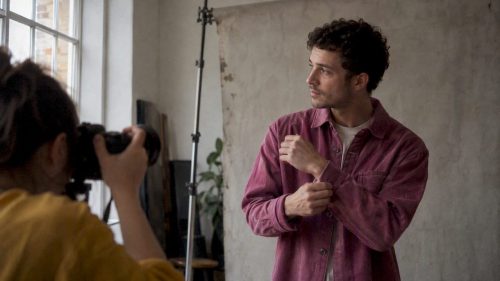
Commission a campaign set of multiple press-ready images, covering promo portraits, live shots, headshots and cover-art formats, delivered as high-resolution masters plus web-optimised variants with a clear usage licence. Before any shoot, write a simple brief covering goals and formats, then book a photographer who understands campaign imagery, such as our team at LemonLens, so the files arrive platform-appropriate.
TL;DR:
- Request at least six varied images, including headshots, live shots, behind the scenes frames, cover art, and portrait, landscape, full body, and close up crops.
- Request TIFF or high resolution JPEG masters at roughly 300 dpi and 2 MB, alongside separate sRGB JPEGs cropped for each platform.
- In the UK, photographers usually retain copyright, so agree permitted uses, territory, duration, credit, exclusivity, and extra fees in writing before the shoot.
- Refresh core press images around each major release or significant visual shift, and archive old sets by campaign rather than deleting them.
Table of Contents
- Types of musician press photos and where to use them
- Technical and platform specs you must deliver
- How to plan and brief a press shoot
- Usage rights and agreements to settle before you shoot
- How to deliver and organise final files for press and playlists
- How LemonLens approaches a musician press shoot
- Best practices for styling and makeup to enhance your image
- Tips for posing and expressions that convey your persona
- Incorporating branding elements in press photos
- Examples of successful musician press photo packages and their impact
- How to select and collaborate with a musician photographer
- Strategies to update and refresh press photos periodically
- Why photography planning matters more than the photographer’s gear
- Book a press shoot built around your campaign, not just a date
- FAQ
- Sources
Types of musician press photos and where to use them
Every campaign needs a mix of image types because no single shot covers press, streaming and social at once. A music editor wants a clean headshot. A playlist curator wants square cover art. A fan wants something that feels real.
The core categories to request from any shoot:
- Promo portraits: a clean headshot and a three-quarter body shot for press releases, posters and social profiles.
- Live performance shots: high-energy images that work for editorial pieces and social proof of stage presence.
- Behind-the-scenes images: candid, unposed shots for storytelling content and fan-facing social posts.
- Album or cover art: conceptual or graphic treatments built for streaming thumbnails and physical sleeves.
- Format variety: portrait, landscape, square and tight close-up crops of the same setup, so one session covers every placement.
Asking for all five categories in one session, rather than booking separate shoots later, keeps your visual identity consistent across a release cycle and saves you from scrambling for a usable image when a journalist asks for one on short notice.
Technical and platform specs you must deliver
Press and streaming platforms each have their own rules, and missing them means rejected uploads or a soft, pixelated poster. For editorial and print use, industry guidance recommends high-resolution masters, around 300dpi and roughly 2MB in file size, so images hold up on a broadsheet page or a full-size poster.
At least six varied campaign images, in portrait, landscape, full-body and close-up formats, is the benchmark PR professionals recommend for versatility across press and promotional placements.
Streaming platforms are stricter about pixel dimensions than file size. Apple Music requires square hero images of at least 2400×2400 pixels, while Spotify sets a 750×750 pixel minimum for avatar images and bans text, advertising or uncleared copyrighted material within the frame.
| Use case | Minimum size | Format notes |
|---|---|---|
| Apple Music hero image | 2400×2400px, square | sRGB, no text overlay |
| Spotify avatar | 750×750px | sRGB, no text or logos |
| Editorial/print master | ~300dpi, ~2MB+ | TIFF or high-res JPEG |
| Web/social variant | Platform-dependent | sRGB JPEG or PNG |
Ask your photographer for master files in TIFF or high-res JPEG alongside pre-exported, web-optimised JPEGs, so you are not re-exporting crops the week a feature deadline lands.
How to plan and brief a press shoot
A good brief turns a vague idea into a shot list a photographer can actually deliver against. Start by mapping each image you need to its use, then build out the practical details around it.
- Define the goals: list every output you need, press release image, playlist cover, poster, social header, and match each to a specific shot.
- Build a moodboard: gather reference images, wardrobe notes, hair and makeup direction, and any props or locations that fit your sound.
- Draft the shot list: aim for six or more frames, a portrait, a landscape, a full-body shot, a headshot, two live-style images and one behind-the-scenes frame.
- Set the timing: solo artists often need less time than a full band; decide between daylight locations and a controlled studio setting based on the mood you want.
- Plan contingencies: book a backup slot or indoor option in case of weather, and allow extra time for outfit changes.
Pro tip: Shoot your tightest crop first while hair and makeup are freshest, then widen out, rather than starting wide and hoping the close-up still holds up an hour later.
On the day, agree lighting setups in advance so changeovers between outfits and backdrops stay quick, and check a test frame against every required crop before moving on, not just the final one.
Usage rights and agreements to settle before you shoot
In the UK, copyright in a photograph usually sits with the photographer by default, not the subject, so you need a written licence or assignment before using images beyond a casual, limited scope.
Settle these points in writing before the session:
- Fee and deliverables: agree the price and the exact number of final edited images included.
- Permitted uses: specify press, streaming, merchandise, or advertising, since each may carry a different scope.
- Territory and duration: confirm whether use is worldwide or limited, and whether the licence is indefinite or time-bound.
- Exclusivity and crediting: agree whether the photographer’s work can appear elsewhere, and how they should be credited.
- Top-up fees: clarify costs in advance for uses outside the original agreement, such as merchandise or a global campaign.
For anything beyond a straightforward press and social licence, such as worldwide merchandising rights, a short conversation with a solicitor is worth the cost of avoiding a dispute later.
How to deliver and organise final files for press and playlists
A press contact or playlist curator who receives a mislabelled folder of 200 files will likely use none of them. Structure delivery so the right file is obvious at a glance.
- Name files clearly: include artist name, shot type and crop, for example
artistname_promo_square_2400px.jpg. - Separate masters from web variants: keep high-res TIFFs in one folder and sRGB web JPEGs in another.
- Supply every crop variant: square, landscape and portrait versions of key shots, each labelled by use.
- Include a short README: note permitted uses and a contact point for licensing questions.
- Share securely: use an expiring download link with clear access permissions rather than an open folder.
How LemonLens approaches a musician press shoot
We build every booking around the purpose of the images first, whether that is a playlist cover, a tour poster or a press release photo, so the shot list is designed around outcomes rather than guesswork. Our process runs from inquiry to delivery with a focus on making every frame count for the client’s actual goals, and we work as a regular band photographer for London acts with recurring gigs, which means ongoing familiarity with an artist’s look and stage presence rather than starting from scratch each time.
A shoot built around a clear brief, not just a nice location, is what turns a photo session into usable press assets.
Deliverables typically include a curated selection of retouched images, full master files and web-ready variants, scoped to the campaign’s actual needs.
Best practices for styling and makeup to enhance your image
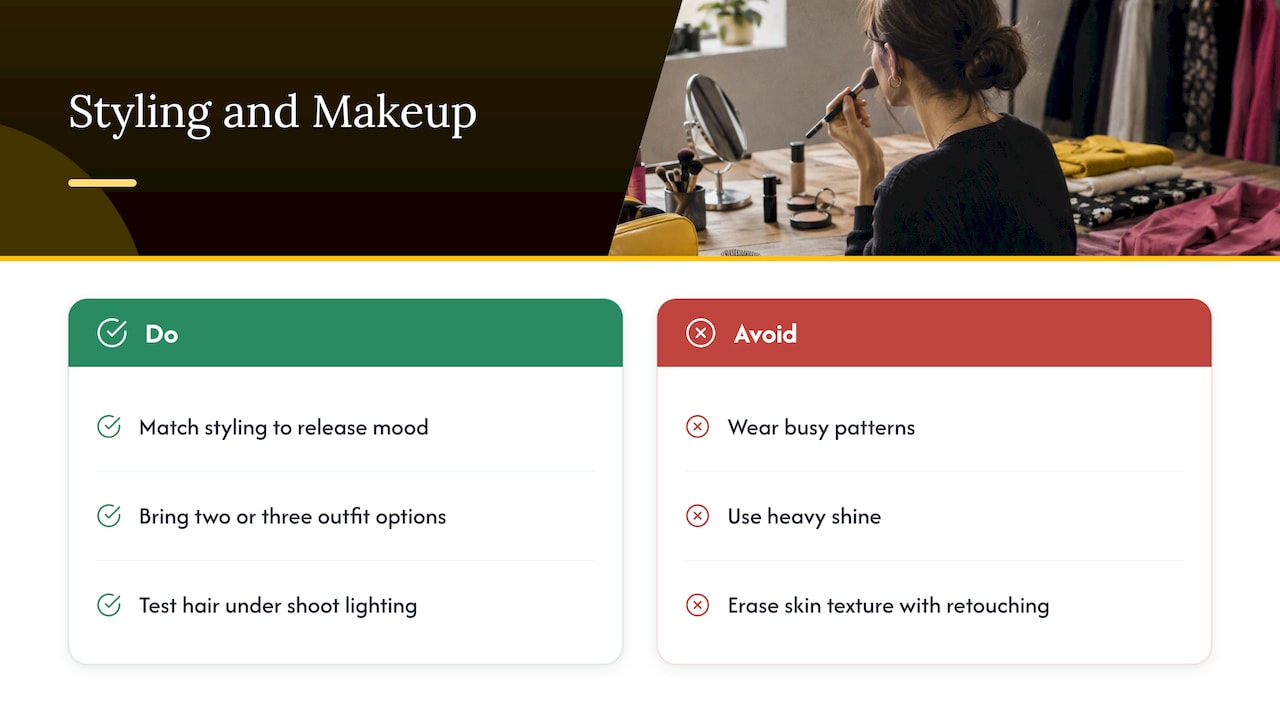
Styling choices should match the mood of the release, not just look good in isolation. A moody, stripped-back single calls for muted tones and minimal makeup, while an upbeat pop campaign can carry bolder colour and sharper contouring.
Keep wardrobe simple and avoid busy patterns that fight with the background or distract from the face, particularly for headshots destined for a small Spotify avatar crop. Bring two or three outfit options rather than one, since lighting can shift how a colour reads once it is on camera.
Makeup for photography generally needs to be slightly stronger than everyday makeup, since studio lighting and camera sensors tend to flatten subtle definition. Matte finishes photograph more reliably than heavy shine, and skin texture should be smoothed rather than erased, since over-retouching reads as artificial on a large poster print.
Hair should be tested under the actual shoot lighting beforehand when possible, since flyaways and shadows show up far more in a high-resolution still than they do in person. Simple, consistent styling across every shot in a session also makes the full set feel like one coherent campaign rather than several unrelated photos.
Tips for posing and expressions that convey your persona
A solo artist building an intimate, acoustic brand needs different body language to a full band fronting an arena rock campaign. Direct eye contact and a relaxed, open posture read as approachable and work well for intimate singer-songwriter imagery. A slight turn away from camera with a sharper gaze tends to suit a moodier, more guarded persona.
For bands, group dynamics matter as much as individual poses. Uneven spacing, overlapping silhouettes and varied heights make a group shot feel natural rather than stiffly lined up. A single strong focal point, usually the lead vocalist positioned slightly forward, helps editors crop the image for a headline without losing the composition.
Expression should match genre expectations without tipping into caricature: a hint of a smile reads as confident and likeable, a neutral or intense stare suits darker or more serious material. Avoid asking for one expression to cover every use case. A press headshot that needs to look professional and a live shot meant to capture energy are different briefs, and trying to get both from the same frame usually satisfies neither.
Incorporating branding elements in press photos
Consistent colour and styling across a shoot help a press photo double as a piece of brand identity, not just a likeness. If your release artwork uses a specific palette, carrying that colour through wardrobe, lighting gels or background choices ties the images to the wider campaign.
Logos and text within the photo itself are best avoided for editorial use. Editorial photography guidance advises against overt branding in press images, since publications and curators generally prefer neutral, versatile shots they can use without obscuring a masthead or playlist title over a logo.
A recurring visual motif, a particular lighting style, a consistent backdrop texture, or a recurring prop, can still signal brand identity without relying on literal logos. Save explicit branding for social headers and merchandise imagery, where text and logos are expected and welcome, and keep the core press set clean enough to run anywhere.
Examples of successful musician press photo packages and their impact
The strongest press campaigns tend to treat photography as part of a sustained rollout rather than a single asset dropped once. Coverage of FLO’s early rise pointed to a bold, consistent visual identity paired with steady content drip across the release timeline as a factor in sustained press attention, rather than photography being treated as an afterthought.
A well-built package gives a press contact options without extra requests: a clean headshot for a quick news mention, a full-body shot for a feature spread, and a live or behind-the-scenes image for a more personal piece. When all three exist from one coherent shoot, coverage can move faster because nobody is waiting on a missing asset.
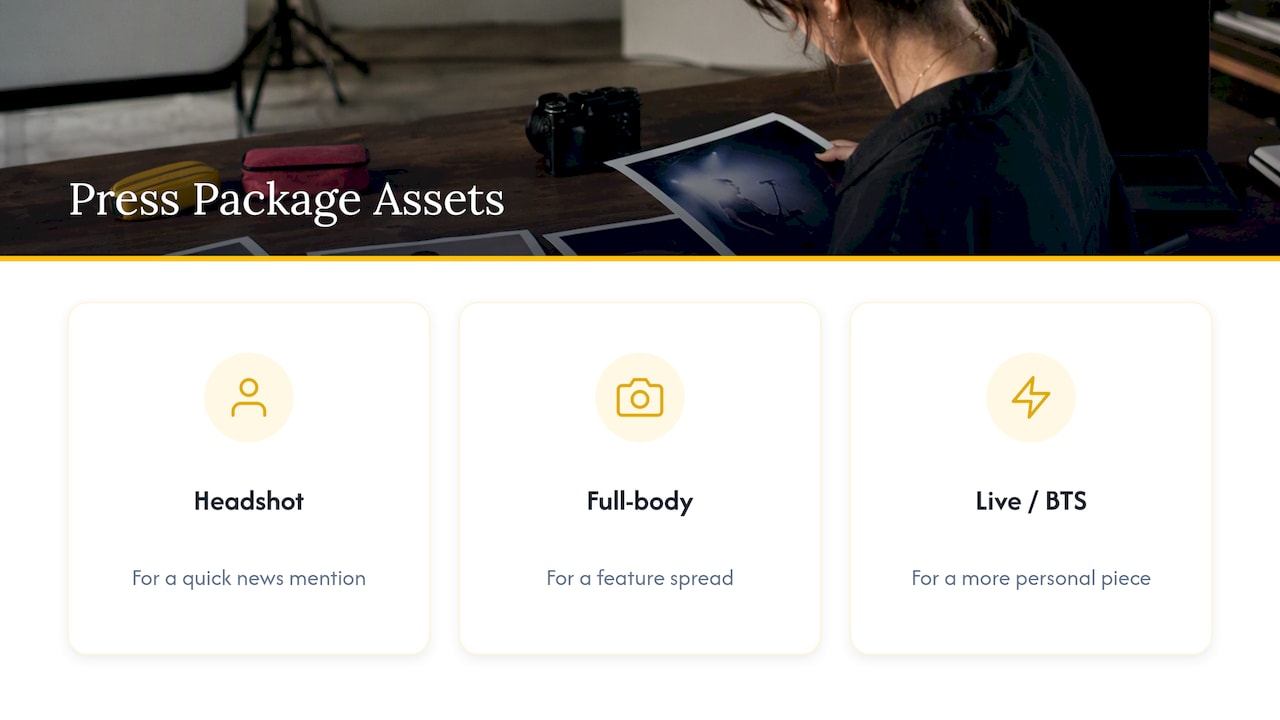
The common thread in packages that get reused repeatedly is versatility built in from the start, varied crops, a neutral but distinctive style, and enough images that a curator or editor always has something that fits their layout.
How to select and collaborate with a musician photographer
Look for a photographer who has handled press or campaign work before, since the brief for musician imagery differs from a standard portrait session. Ask to see a varied portfolio covering headshots, live shots and conceptual cover art, not just one style repeated.
Dock Street Studio in Leeds publishes practical guidance on headshot lighting and planning that is worth reading alongside your own brief, particularly if you are weighing up studio hire against an on-location shoot.
PR professionals often point to the value of a genuine creative partnership between artist and photographer, since trust and access to an artist’s personality tend to produce stronger storytelling in the final images than a purely transactional session. Share your brief, reference images and goals clearly before booking, and confirm turnaround time and the number of final images included in the fee. A photographer who asks about the purpose of the shoot before discussing locations is usually the one who delivers assets you can actually use.
Strategies to update and refresh press photos periodically
Press images age faster than most artists expect. A look that suited one single can feel out of step with a new sound within a year, and journalists tend to notice when the same photo has circulated for several release cycles.
A practical rule is to refresh your core press set around each major release or significant change in visual direction, rather than waiting until the old images feel obviously dated. Keep the same technical specs each time, so new files slot straight into existing platform profiles without a scramble to resize.
Archiving old sets by date and campaign, rather than deleting them, also means you can track how your visual identity has shifted and avoid accidentally repeating a styling choice that already felt tired last cycle.
Why photography planning matters more than the photographer’s gear
The most overrated factor in musician press photography is equipment. A camera body or lens does less for the outcome than a clear brief, decent natural or studio lighting, and a shot list built around actual use cases. Many artists spend time researching gear and almost none planning what each image needs to achieve, which is backwards.
The conventional advice to “just get some professional photos” undersells how much a weak brief costs later: a single generic headshot cannot serve a press release, a Spotify avatar and a poster equally well, no matter how sharp the lens was. The reader’s first priority should be the shot list, not the photographer’s portfolio aesthetics, since a photographer with a strong eye but no understanding of platform specs will still hand over unusable files.
Readers who treat this as a technical delivery problem, not just a creative one, get better results. Specs, rights and file organisation are unglamorous, but they decide whether the photos actually work once the shoot is over.
— Emmet
Book a press shoot built around your campaign, not just a date
We start every musician booking by clarifying what the images need to achieve, whether that is a press release photo, a playlist cover or a poster, so the shot list reflects your campaign rather than a generic package. Our fully directed approach keeps sessions efficient, and rapid delivery means your files are ready while they are still relevant to the release.
For musicians and solo artists, our portrait and campaign packages cover headshots, promo portraits and the varied crops a press kit needs, with transparent pricing from the outset. If your project includes recurring gig coverage, our work as a band photographer for London artists is worth a look too.
Get in touch to discuss your shot list and request a quote for your next campaign.
FAQ
How many press photos should a musician have ready?
Aim for at least six varied images covering portrait, landscape, full-body and close-up formats, which PR guidance recommends for versatility across press and promotional placements. This mix lets you respond to different requests, from a quick news mention to a full feature spread, without scrambling for a new shot.
What image size does Spotify require for artist photos?
Spotify requires avatar images to be at least 750×750 pixels, with content rules against text, advertising or uncleared copyrighted material in the frame. Apple Music sets a higher bar, requiring square hero images of at least 2400×2400 pixels, so it is worth supplying your largest master to cover both.
Who owns the copyright to musician press photos?
In the UK, copyright in a photograph generally belongs to the photographer unless a written licence or assignment transfers those rights to you. Agree the permitted uses, territory and duration in writing before the shoot to avoid disputes later.
What file formats should I request from a press photo shoot?
Request high-resolution master files, typically TIFF or high-quality JPEG at around 300dpi, alongside web-optimised sRGB JPEGs sized for each platform you plan to use. Having both ready to hand off avoids delays when a journalist or playlist curator needs a quick turnaround.
How much do musician press photos cost with LemonLens?
Portrait and campaign sessions start from £200 for The Solo, with The Brand at £500 and The Team from £795 for bands or larger groups. Pricing is transparent from the outset, so you know the cost before booking.
Sources
- How to take a great band photo — PRS for Music
- Apple Music artist image specification — Apple
- Spotify artist image guidelines — Spotify Support
- BBC photography editorial policy guidance