
TikTok generally wins for discovery and viral reach, especially among younger viewers searching for fresh content. Instagram Reels tends to perform better when your goal is converting existing followers into customers, since it sits inside a platform built around profiles and direct messaging. There are exceptions on both sides, which the sections below explain using Ofcom data and practical creator experience.
TL;DR:
- TikTok offers faster growth for new creators by prioritizing discovery, watch time, and trending content, especially among audiences aged 13 to 17.
- Instagram Reels favors existing followers and community engagement, making it more suitable for nurturing relationships and converting followers into customers.
- Cross-posting requires native editing and caption tailoring for each platform to prevent underperformance and account for different pacing and audience expectations.
- Content designed for TikTok’s rapid, trend-driven style may feel slow or overly polished on Instagram, and vice versa, so tailoring each version enhances engagement.
- Focusing on algorithm rewards—growth for TikTok and trust-building for Instagram—guides platform choice based on whether the goal is reach or conversion.
Table of Contents
- Instagram Reels vs TikTok at a glance
- How the algorithms differ and why it matters for creators
- Who actually uses each platform
- Format and production differences that affect performance
- What drives engagement on each platform
- Cross-posting without losing reach
- What this means for brand and event creators
- Why the algorithm-first view matters more than platform loyalty
- Sources
- FAQ
Instagram Reels vs TikTok at a glance
TikTok draws a younger audience and rewards content that strangers discover through its recommendation feed. Instagram Reels lives inside a platform where most viewers already follow the creator, so it tends to favour community building and conversion over cold discovery.
- Audience and use case: TikTok skews younger and discovery-led; Instagram Reels skews toward existing followers and brand relationships.
- Reach pattern: TikTok surfaces content to non-followers aggressively; Instagram Reels often performs best when it reaches people who already know the account.
- Video length and editing: Both support short vertical clips, but TikTok’s native editor leans into trend-based effects while Instagram’s leans into polish and Stories integration.
- Monetisation: Both offer creator funds and brand partnership tools, though the specific programmes and eligibility criteria differ by platform and region.
How the algorithms differ and why it matters for creators
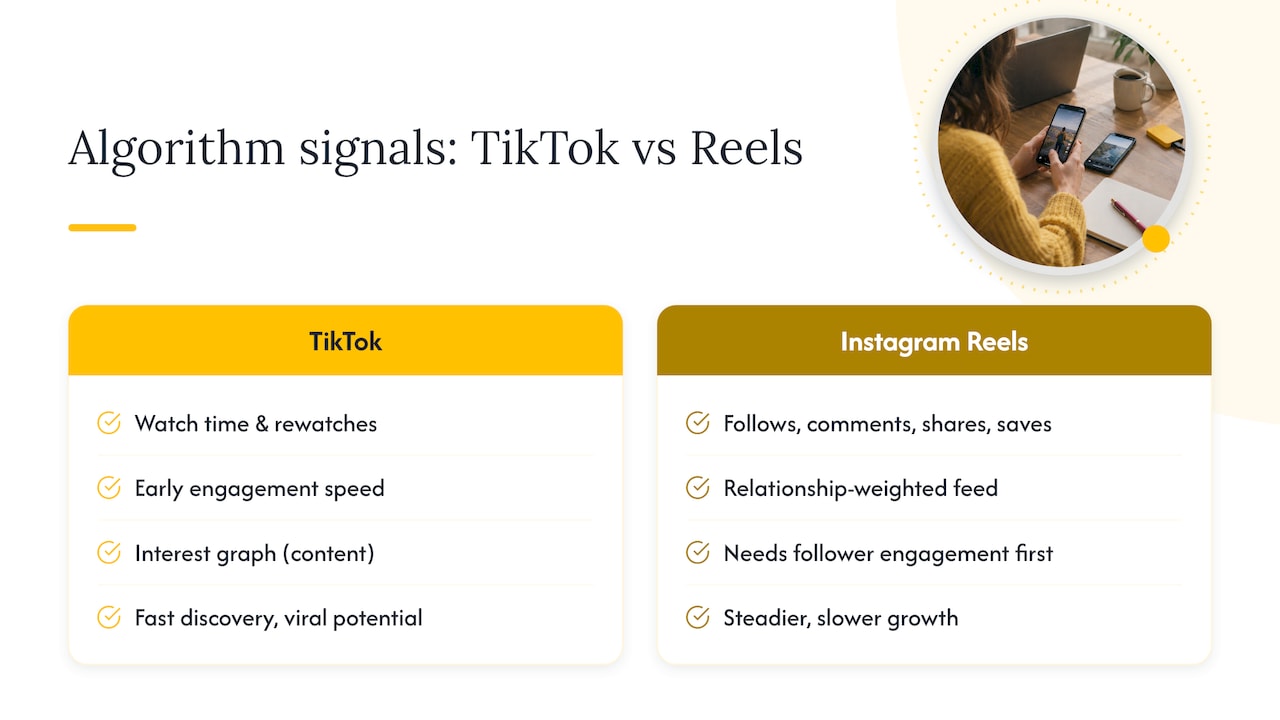
TikTok’s recommendation system leans heavily on watch time and early engagement. The platform tracks how long someone watches a clip, whether they rewatch it, and how quickly early viewers interact, then uses that signal to decide whether to push the video to a wider audience. This is often described as an interest graph: TikTok maps what a viewer tends to watch rather than relying only on who they follow, which is why a brand-new account can go viral on its first post.
Instagram places Reels within a broader feed experience that still rewards interactions, comments, shares, saves, but tends to weight existing relationships more heavily. A Reel from an account you follow is more likely to appear in your feed than a cold recommendation, which makes Instagram’s growth curve steadier but slower for unknown creators.
For a new creator, this means TikTok often offers the faster route to an audience, while Instagram Reels rewards patience and consistent engagement with a smaller base. An example: a quick, trend-driven clip filmed on a phone might thrive on TikTok purely on the strength of a strong hook, while the same clip on Instagram may need a few comments and saves from existing followers before it reaches anyone new.
Who actually uses each platform
Ofcom’s Children’s Media Literacy Report found that a majority of 13 to 17 year olds watch videos on TikTok, with a smaller share watching Instagram. Among adults, Ofcom’s Adults’ Media Use and Attitudes report found that younger adults increasingly use platforms like TikTok daily, including as a search and discovery tool, particularly for place- or activity-based searches.
This age skew matters for strategy. A brand targeting teenagers or young adults will likely find a bigger discovery audience on TikTok, while one targeting a broader adult demographic, including older age groups who are less active on TikTok, may find Instagram’s reach more balanced. When your audience overlaps both platforms, posting to both makes sense, but the content approach should still differ. One caveat worth flagging: findings about teenage viewing habits do not automatically apply to adult audiences, so a campaign aimed at parents or professionals needs its own evidence rather than assumptions borrowed from youth data.
Format and production differences that affect performance
Both platforms favour vertical video, but the practical details differ enough to affect how well a clip performs and how easily you can reuse it.
- Aspect ratio and length: A 9:16 vertical frame works on both, though TikTok videos commonly run longer and Instagram Reels tend to perform best when kept tighter and punchy.
- Native editing and audio: Each platform has its own effects library and licensed music catalogue, and using native tools rather than importing a pre-made file often helps a clip surface more readily.
- Captions and metadata: On-screen captions and a clear on-platform caption with relevant keywords help both platforms understand and categorise your content.
- Repurposing: Filming without a platform watermark and keeping raw footage available makes it far easier to re-edit for the other platform later.
What drives engagement on each platform
TikTok rewards a strong hook in the first second or two, visible participation in trends or sounds, and a steady posting cadence. Native-feeling edits, the kind made inside TikTok’s own tools rather than imported from elsewhere, tend to be favoured by the recommendation system.
Instagram Reels rewards a more polished visual, a clear call to action, and a flow that connects a Reel to Stories or a profile link. Because Instagram viewers are more likely to already follow the account, nudging them toward a bio link or DM tends to convert better than it would on TikTok.
Shared tactics matter on both: a strong opening frame, captions for sound-off viewing, and a format you can repeat weekly so you can compare results rather than guessing. Track completion rate, shares, saves and follower growth attributable to video, then run a simple test: post the same concept with two different hooks and compare which one holds attention longer.
Cross-posting without losing reach
Reusing a video across both platforms is efficient, but publishing the exact same file on both tends to underperform compared with a quick platform-specific pass.
- Remove any watermark before cross-posting, since a visible logo from the other platform can suppress distribution.
- Re-edit natively on the second platform rather than simply uploading the same export.
- Retime the hook and trim or extend length to suit each platform’s typical pacing.
- Rewrite the caption and hashtags for each platform rather than copying one across.
- Decide which platform is primary for this piece of content and stagger publishing by a few hours rather than posting both at once.
The most common mistake is treating both platforms as identical distribution channels. A video built for TikTok’s trend-driven pacing often feels rushed on Instagram, while a polished Instagram-style Reel can feel slow by TikTok’s standards.
What this means for brand and event creators
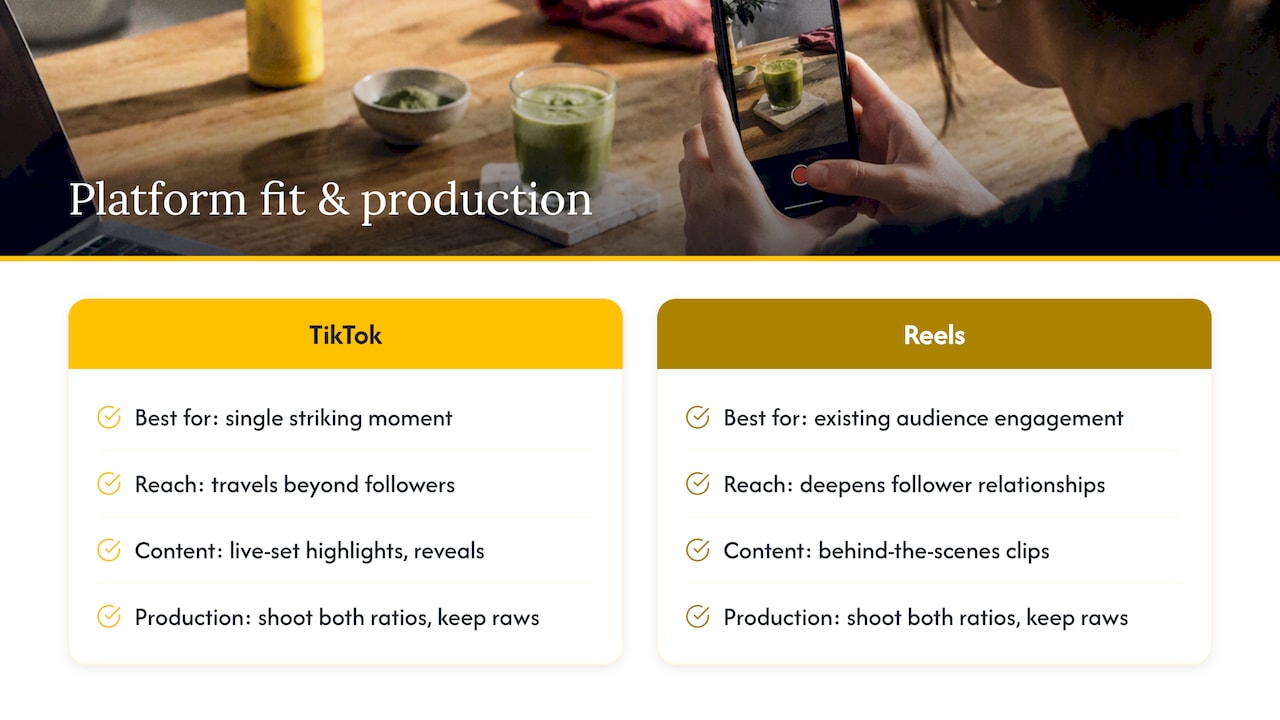
For event promotion or artist marketing, TikTok often suits content built around a single striking moment designed to travel beyond your existing following, such as a highlight from a live set or a reveal moment at a launch. Instagram Reels tends to suit content aimed at an audience that already knows the brand, such as behind-the-scenes clips that deepen a relationship with existing followers or clients.
A practical production checklist for short-form brand content: capture a few seconds of genuinely striking footage first, shoot with both aspect ratios in mind, and keep raw files so you can re-cut separately for each platform. Turnaround speed affects impact too. A clip delivered while an event or trend is still current has a far better chance of catching the right algorithmic window than one delivered days later. LemonLens structures event photography and promo video work, including projects like a DJ promo shoot in East London, around exactly this kind of rapid delivery.
Pro Tip: Test one concept across both platforms with a different first-second hook on each, then compare completion rates before committing a content series to one format.
Why the algorithm-first view matters more than platform loyalty
Most advice on this topic treats TikTok and Instagram Reels as rivals you must choose between, which misses the point. The real decision is about what each algorithm rewards, not which app feels more exciting to use this year. TikTok’s discovery engine suits a message built to travel to strangers; Instagram’s structure suits a message built to deepen trust with people who already follow you.
The conventional advice to “just post everywhere” undersells how differently the two platforms treat a cold viewer versus a warm one. A business chasing growth needs TikTok’s reach logic; a business chasing bookings or sales from an existing audience often gets more value from Instagram’s relationship-driven feed. Readers should prioritise understanding their own goal, reach or conversion, before worrying about trends, filters or posting times. Everything else in this comparison is tactics layered on top of that one decision.
— Emmet
Sources
This article draws on Ofcom’s Online Nations report for time-spent patterns, Ofcom’s media literacy research for audience age data, and a social media trends overview for broader context on where short-form video is heading.
- Adults’ media use and attitudes 2025 (Ofcom)
FAQ
Is it better to post on Instagram Reels or TikTok?
It depends on your goal: TikTok tends to offer stronger reach to people who do not already follow you, while Instagram Reels tends to convert existing followers more effectively. Many creators benefit from posting to both but tailoring the edit, caption and hook to each platform rather than uploading identical files.
What is the 5-3-1 rule on Instagram?
The 5-3-1 rule is a popular informal posting guideline suggesting a mix such as five Reels, three feed posts and one Story-based piece of content per week, though definitions vary across sources. It is not an official Instagram policy, so treat it as a rough content-mix framework rather than a fixed rule.
Do more people use TikTok or Instagram Reels?
Usage varies sharply by age group. Ofcom’s research found a majority of 13 to 17 year olds watch TikTok videos, with a smaller share watching Instagram, while adult usage patterns differ and should not be assumed to mirror teenage behaviour.
Is Instagram Reels as big as TikTok?
Instagram Reels reaches a broad adult audience through its wider platform, while TikTok shows stronger daily engagement and time spent among younger users according to Ofcom’s online usage data. Neither platform is simply “bigger” overall. It depends on the age group and the metric you are comparing, reach versus time spent versus daily frequency.